Pripyat Retail
Припять Торговля

The Pripyat Retail provide the residents with food and goods. Pripyat was one of the more privileged places in The Soviet Union because of the Power Plant. For example it was one of the only places you could get Chanel No. 1, and various quality Western goods. Products you could normally only buy in Moscow, Russia.
The city of Pripyat had almost 50 thousand people living in it. To provide the Pripyat residents with food and goods there were 25 stores and malls. Also there were 27 cafes and restaurants that collectively could serve up to 5,5 thousand customers simultaneously. The trading pavilions and small shops in the city are close and easily accessible to the citizens.
Supermarket
The central supermarket was one of the largest in Pripyat. It is located right at the main square. The ground floor was mainly for food and had huge freezer cabinets. The now rusty freezers, were emptied in 1987, the food was buried by the female liquidators to stop the spread of infectious diseases. On the first floor of the supermarket was a restaurant with a nice view across Pripyat’s Lenin Square.
The КБО building, was the Consumer Services Building, here housed several different consumer services. There was a hairdressing salon, shoe shop, dry cleaning, a chemist and a textile repair shop.
Post Office
Behind the Furniture Shop, there was an Electrical Goods Shop which housed many models of appliance which could also be found inside the Pripyat apartment blocks. A large colorful Soviet-era mural decorates the wall inside the abandoned Post Office. Postcards and letters litter the floor.
Cafe Pripyat, also called ‘The Dish’ by locals, is located on the waterfront on the outskirts of Pripyat city. It was a popular place to spend time relaxing for the young residents of the city. Also the cafe was a place for people who were waiting for boats, specifically the ‘Raketa’, ‘Comet’ and ‘Meteor’, which navigated the Pripyat river. Inside the cafe are beautiful stained-glass windows looking out towards the city.
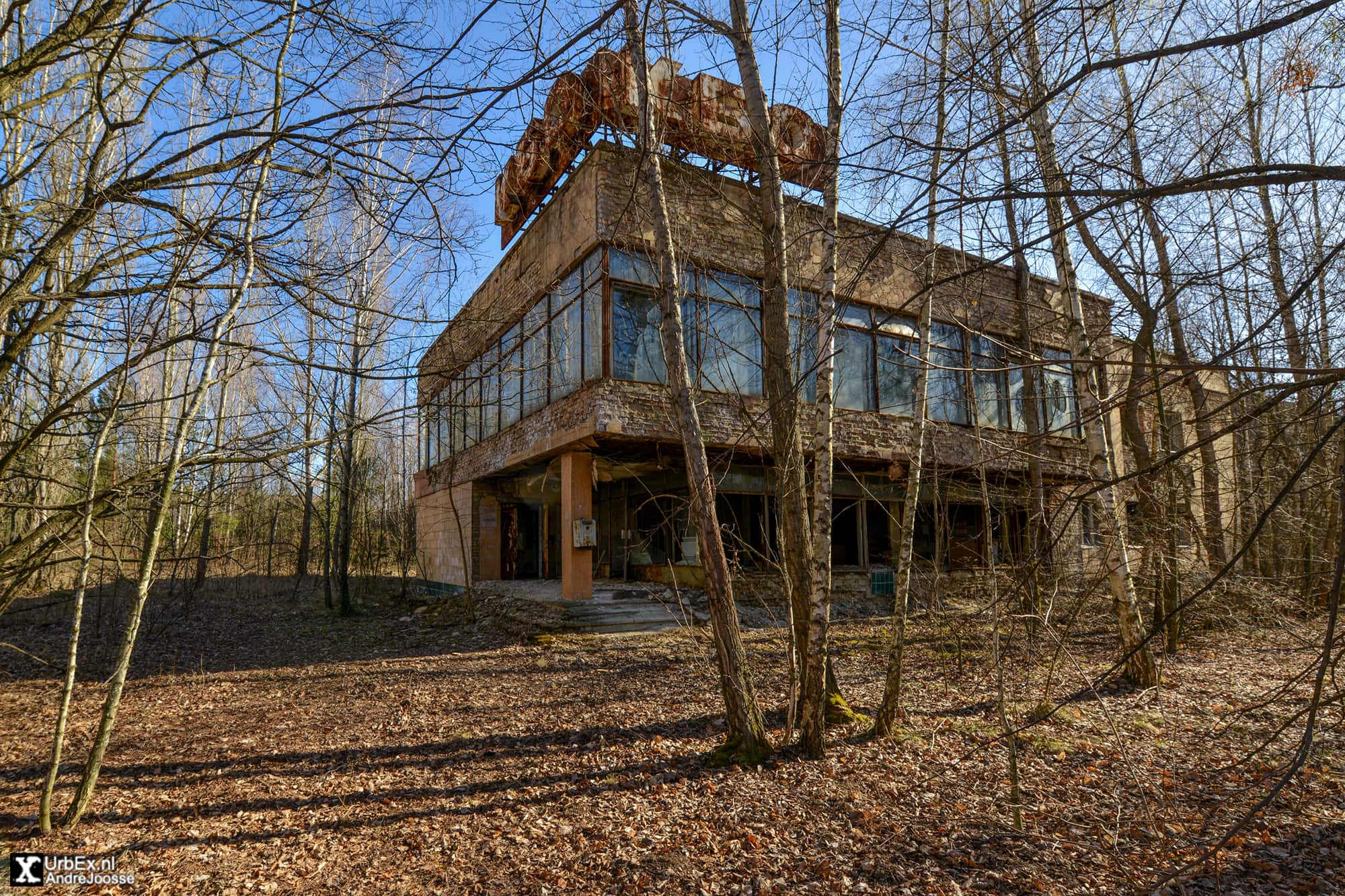

KBO: Consumer Services Building. 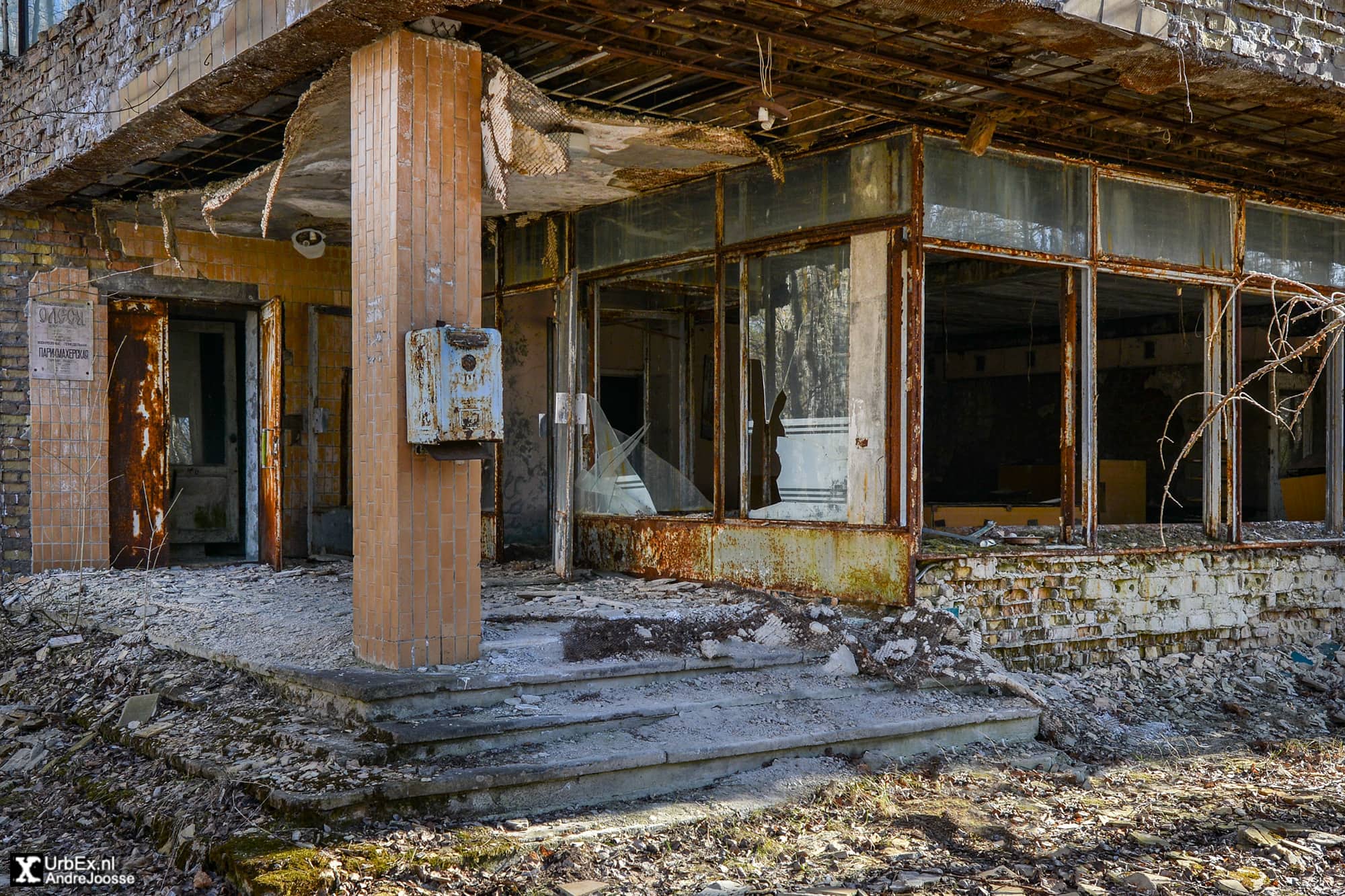
The entrance of the КБО. 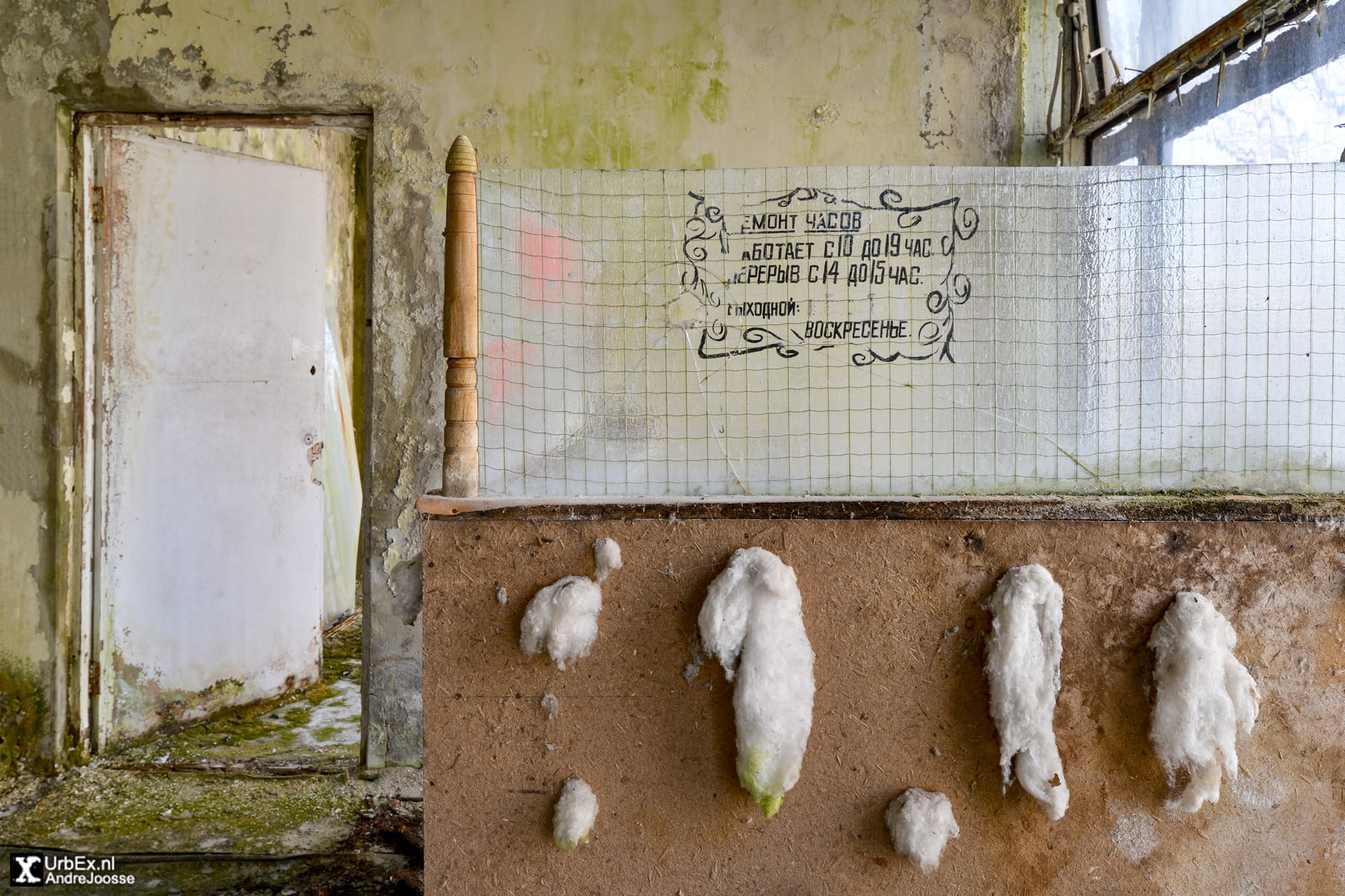
Opening hours at the entrance. 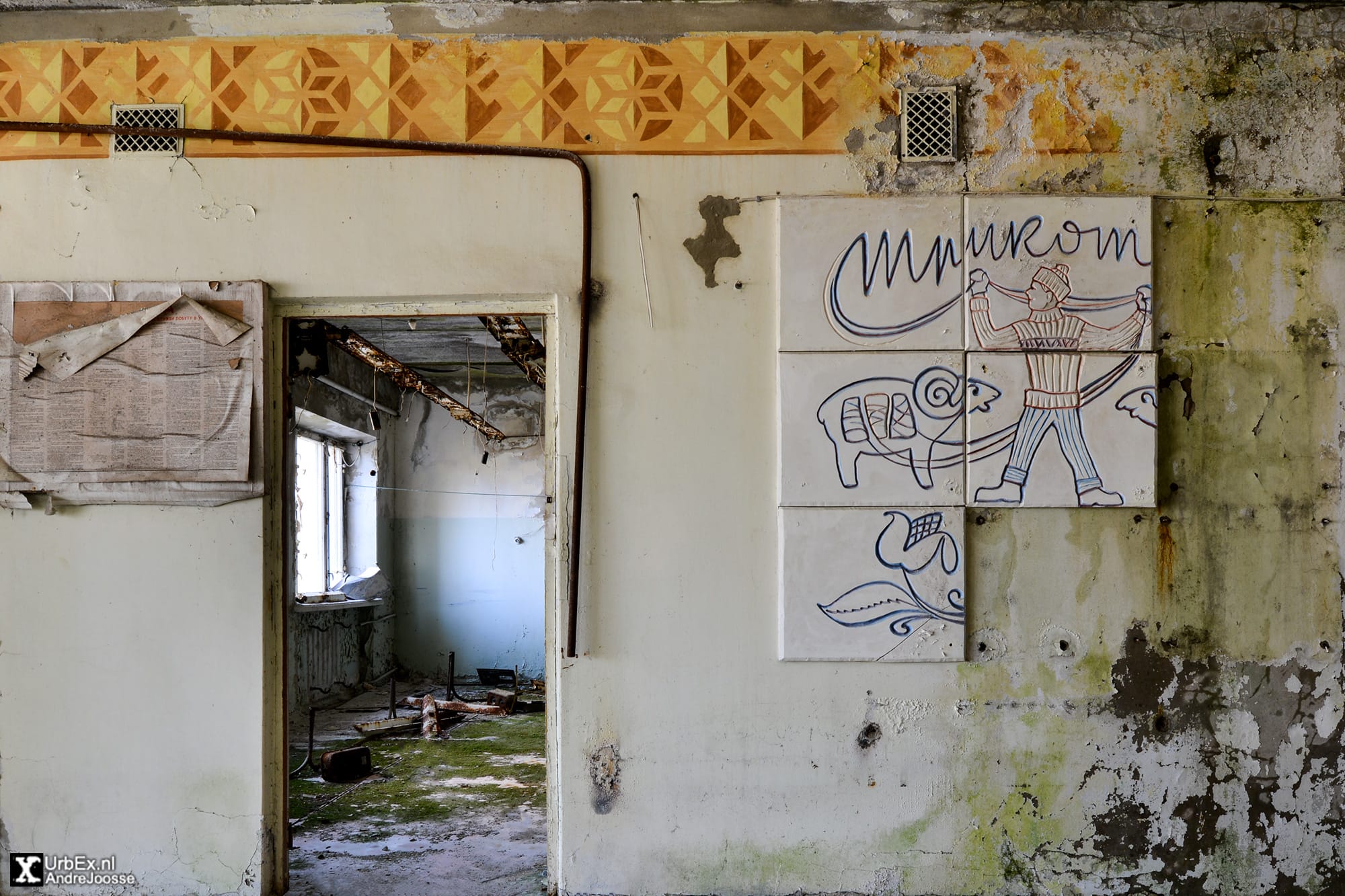
Art at the wall of the hairdresser. 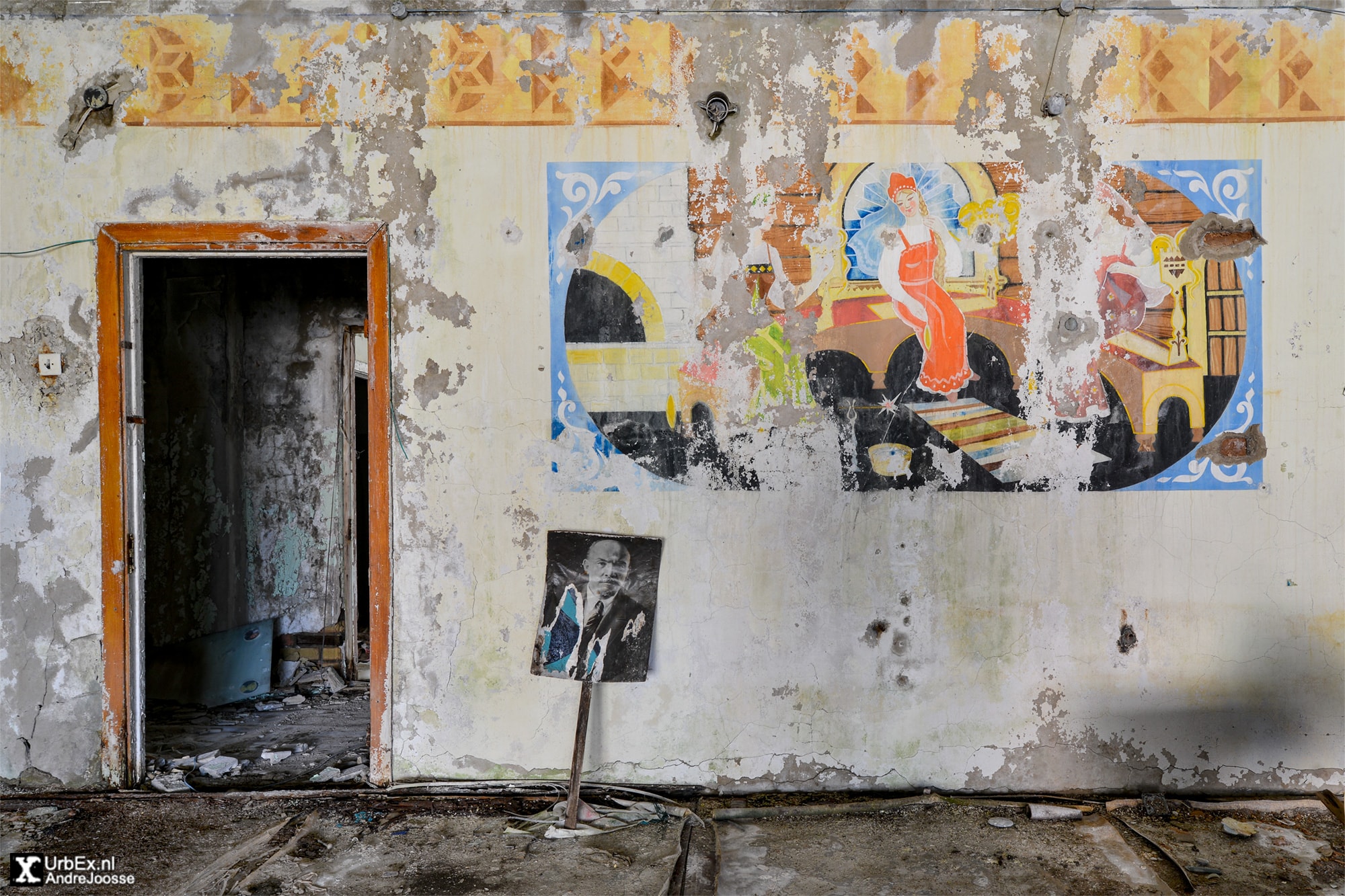
Lenin in front of a decaying wall. 
Pripyat hairdressing salon. 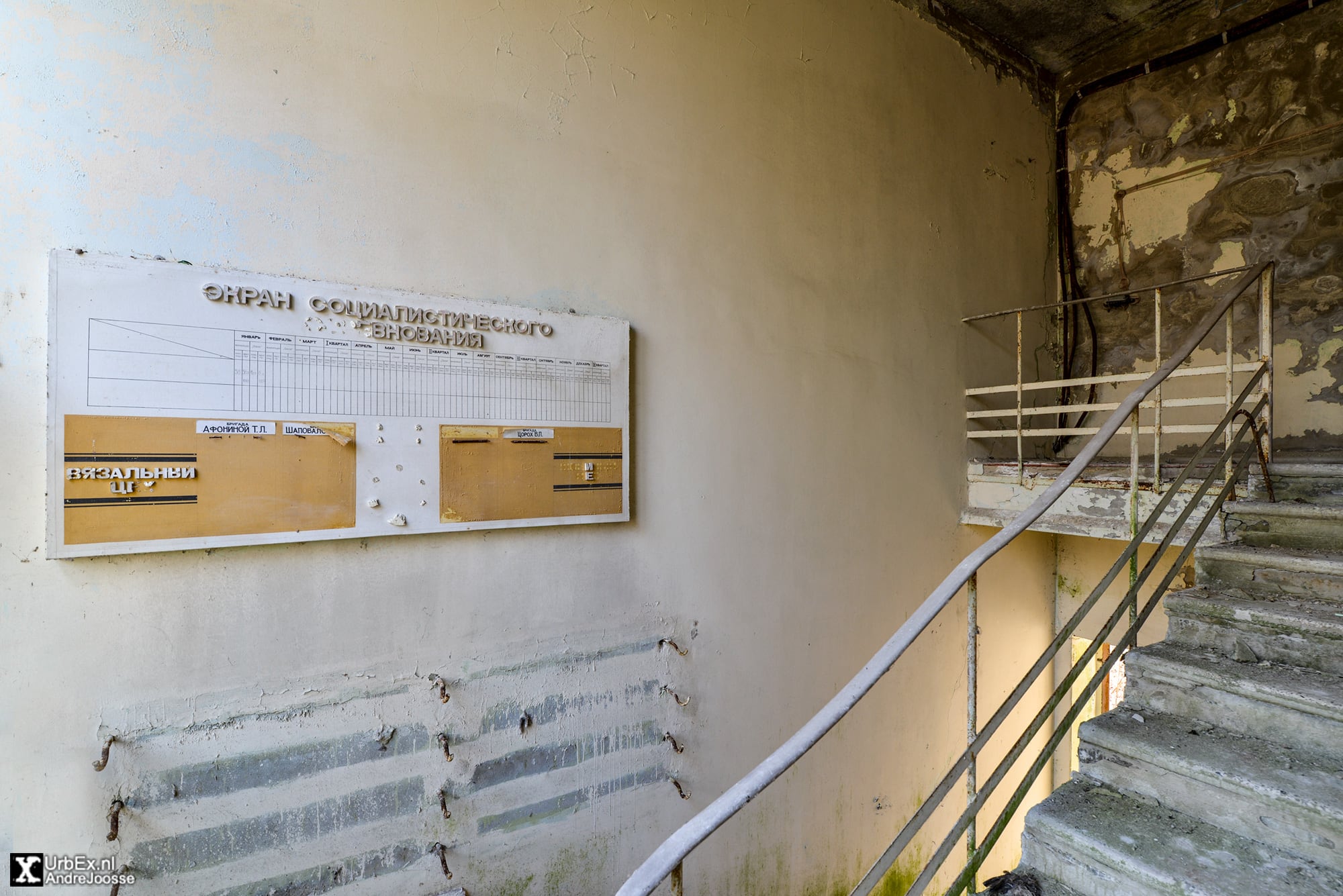

Flight of stairs. 
Annoincements of the building. 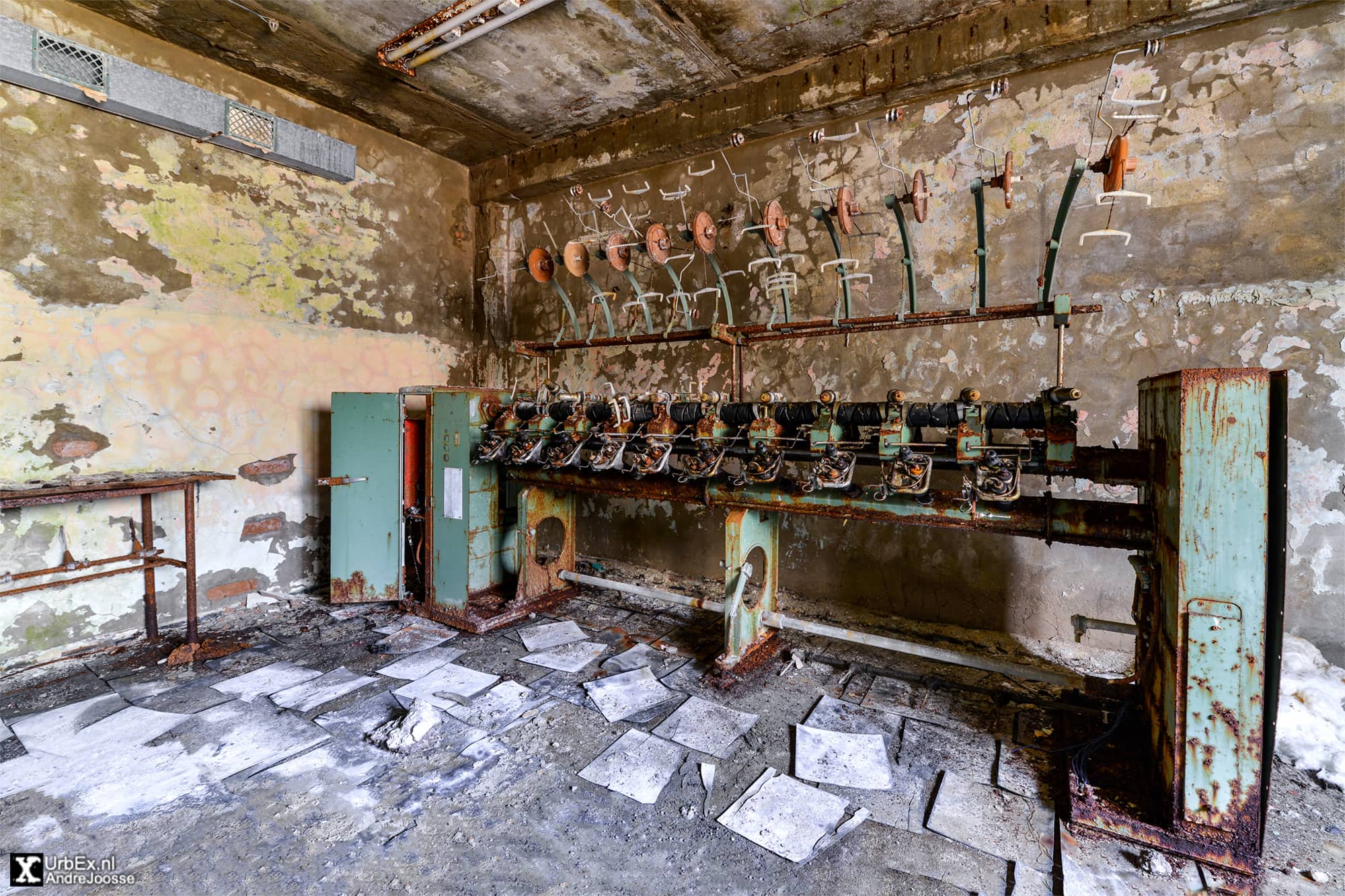
Textile shop. 
textile shop. 
КБО: Комбинат Бытового Обслуживания. 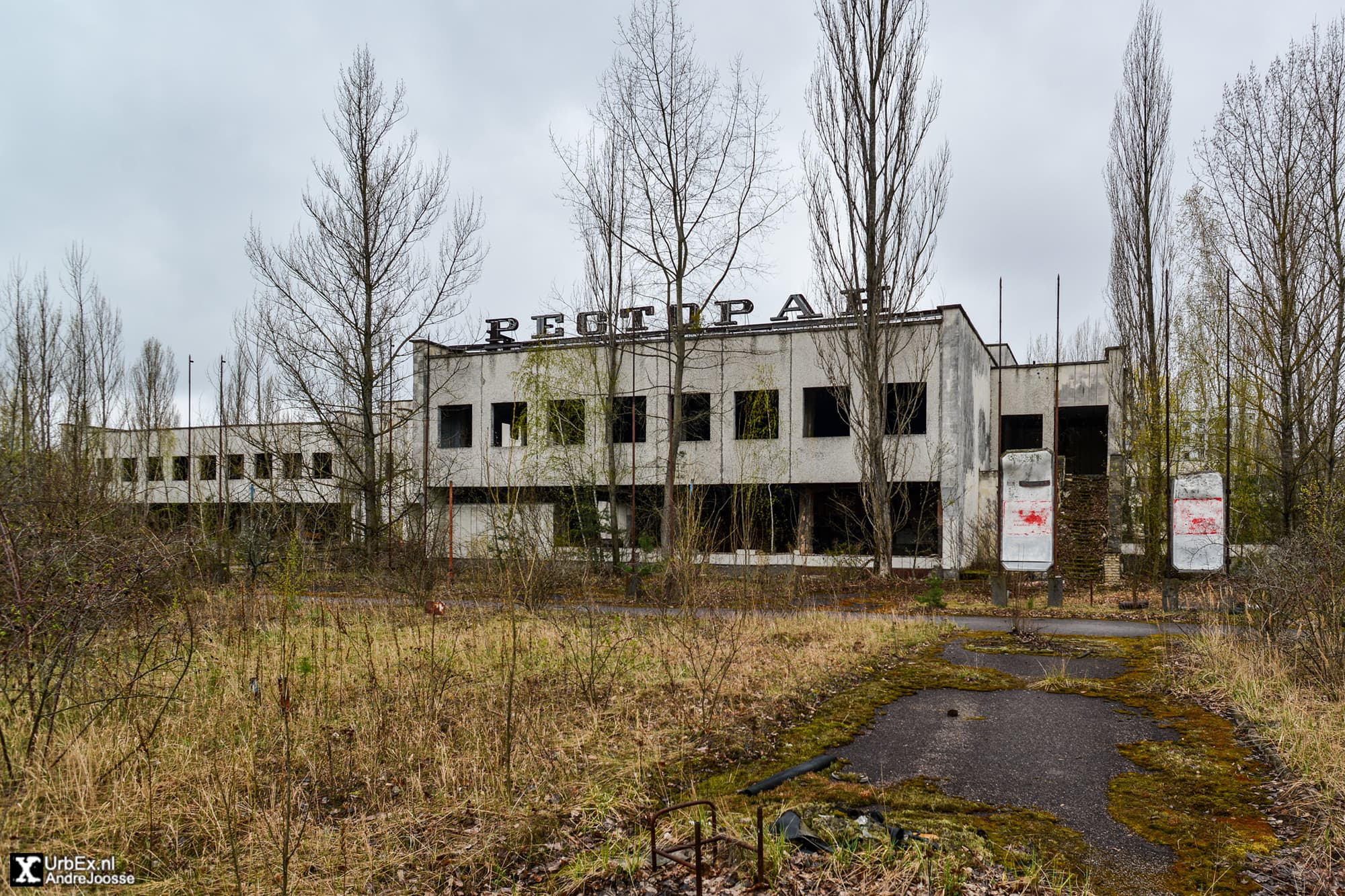
Restaurant and supermarket. 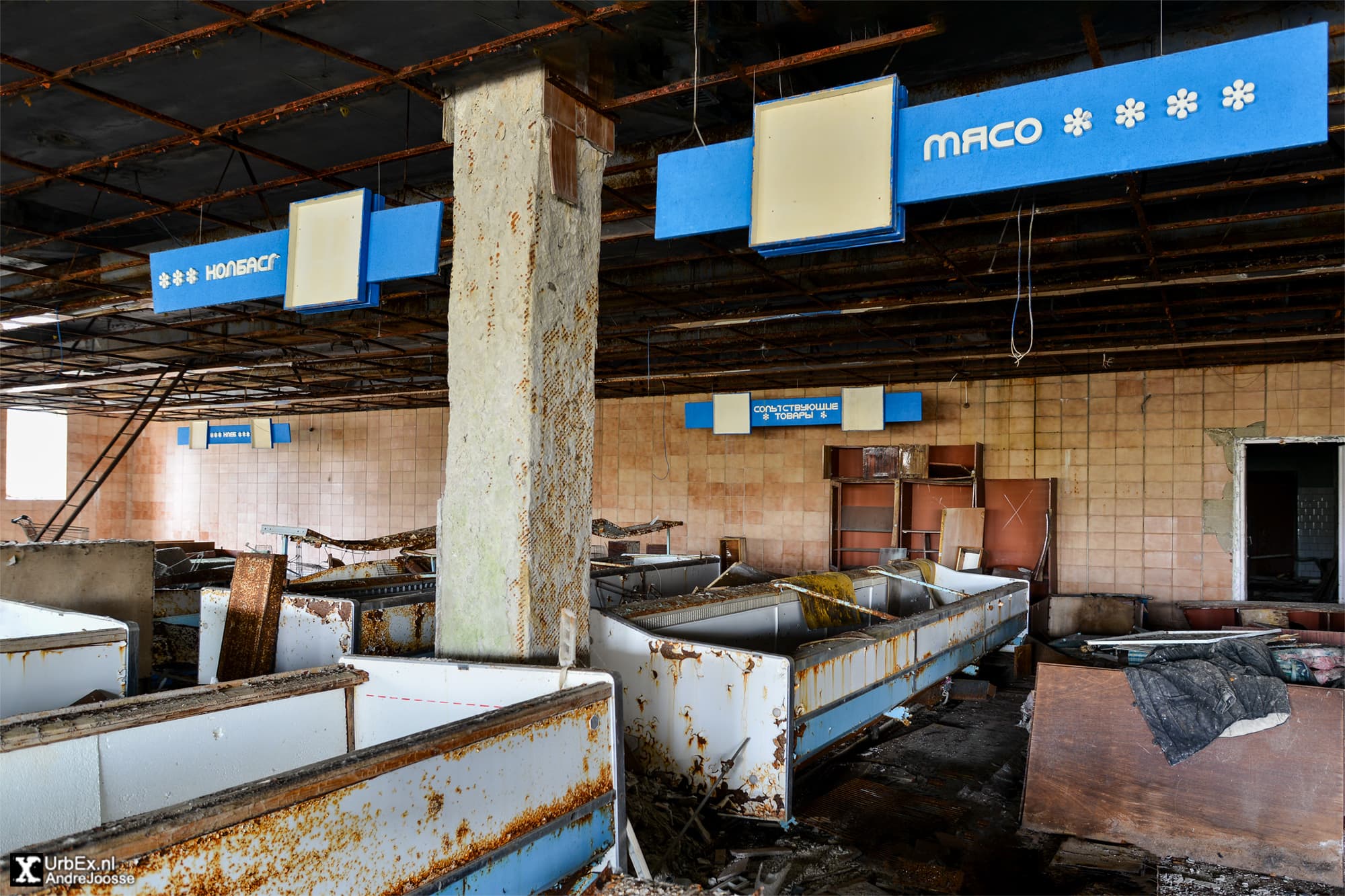
Мясо or Myaso, means Meat. 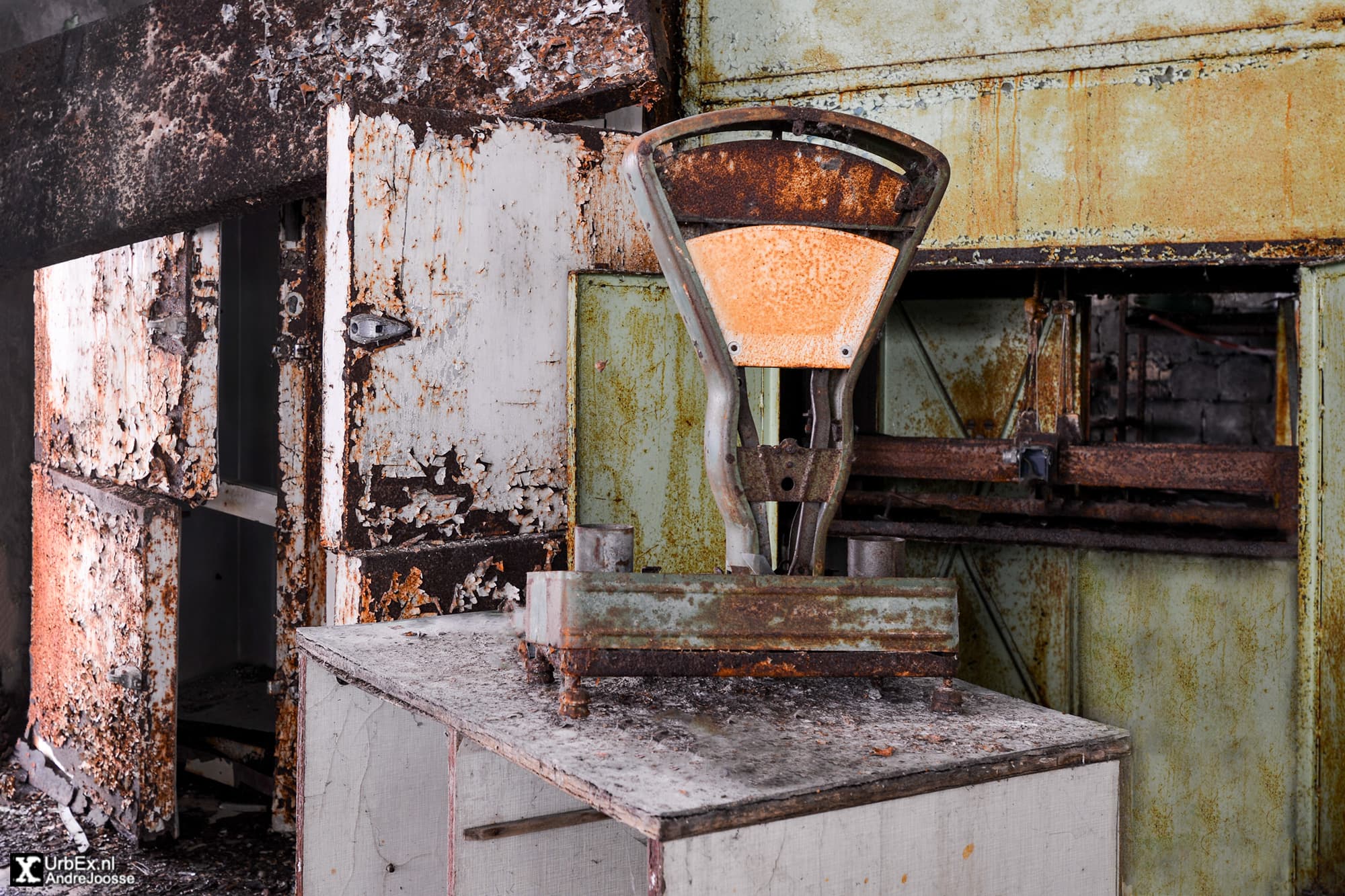
The butcher. 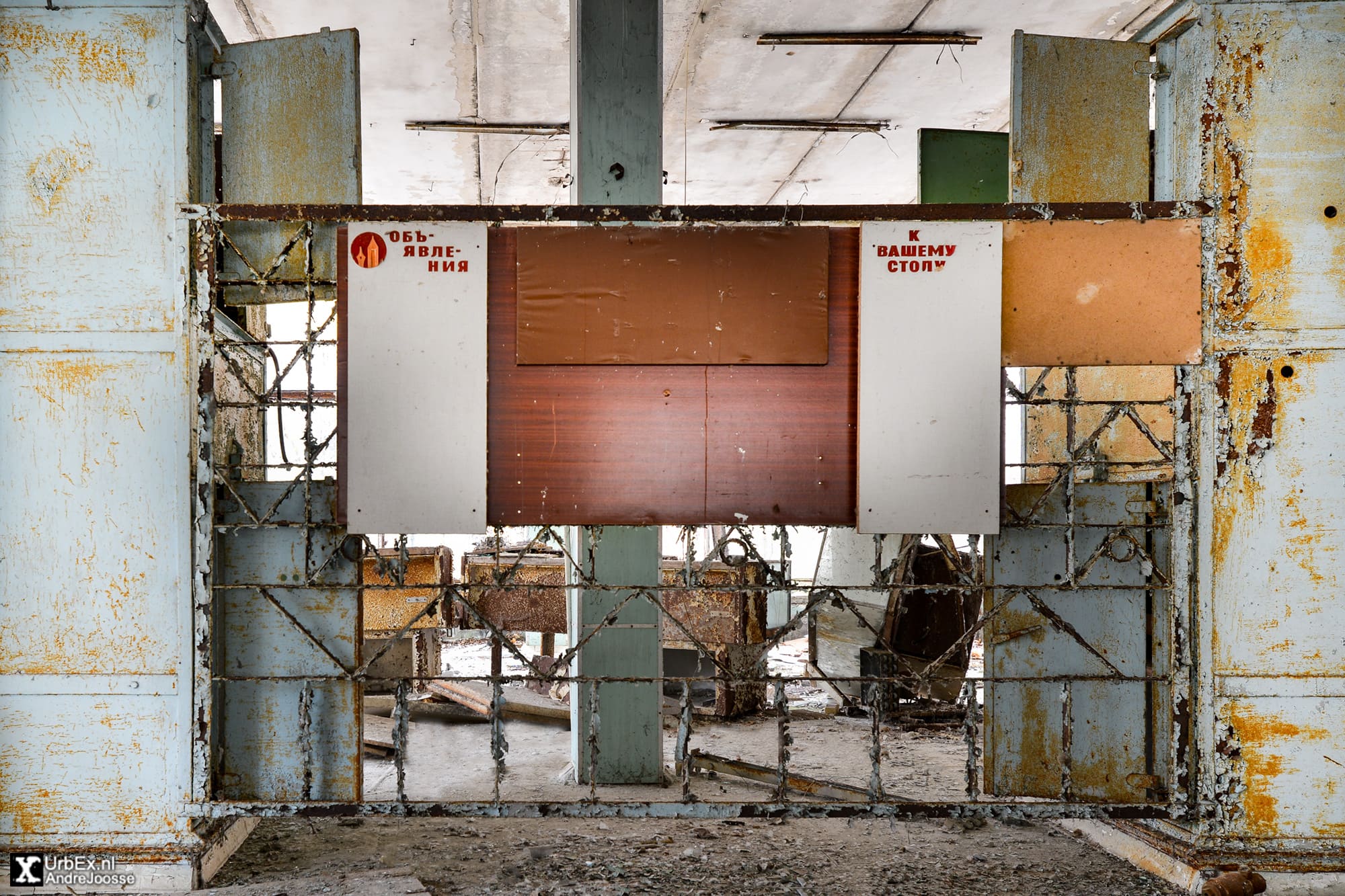
Propaganda wall in the supermarket. 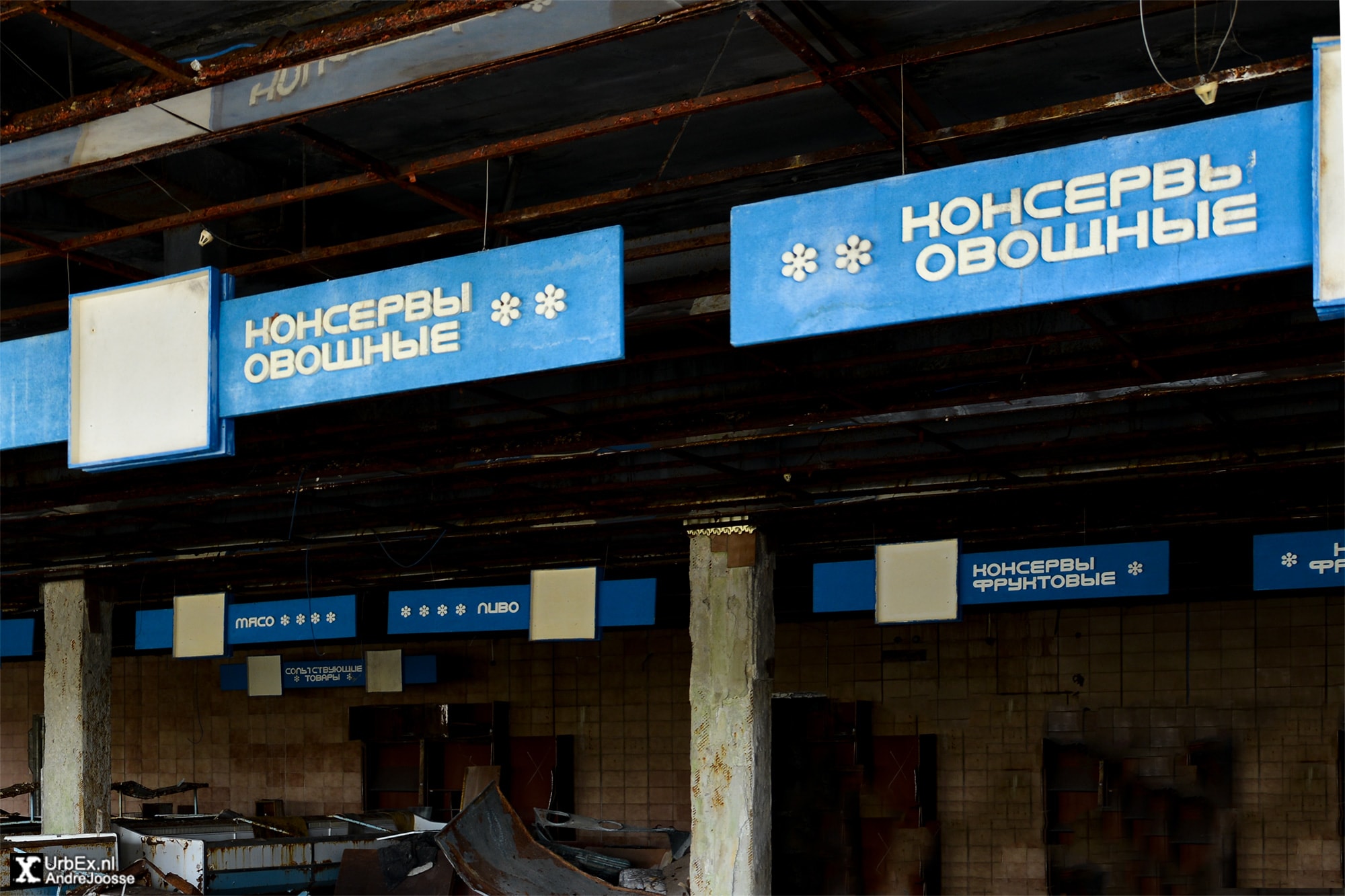
The Pripyat central supermarket. 
Ресторан or restaurant. 
The furniture store. 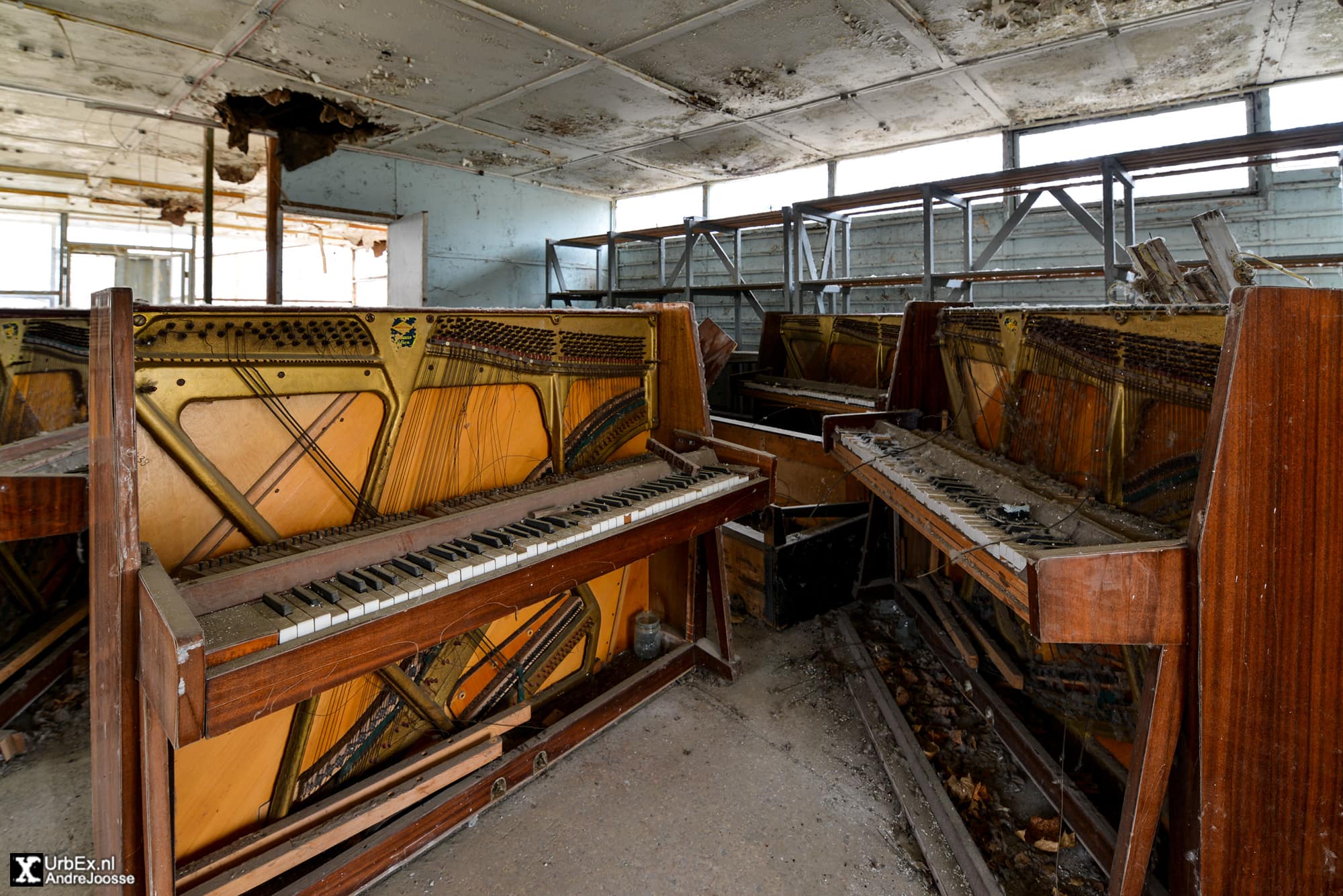
The piano shop. 
The piano shop. 
The Pripyat post office. 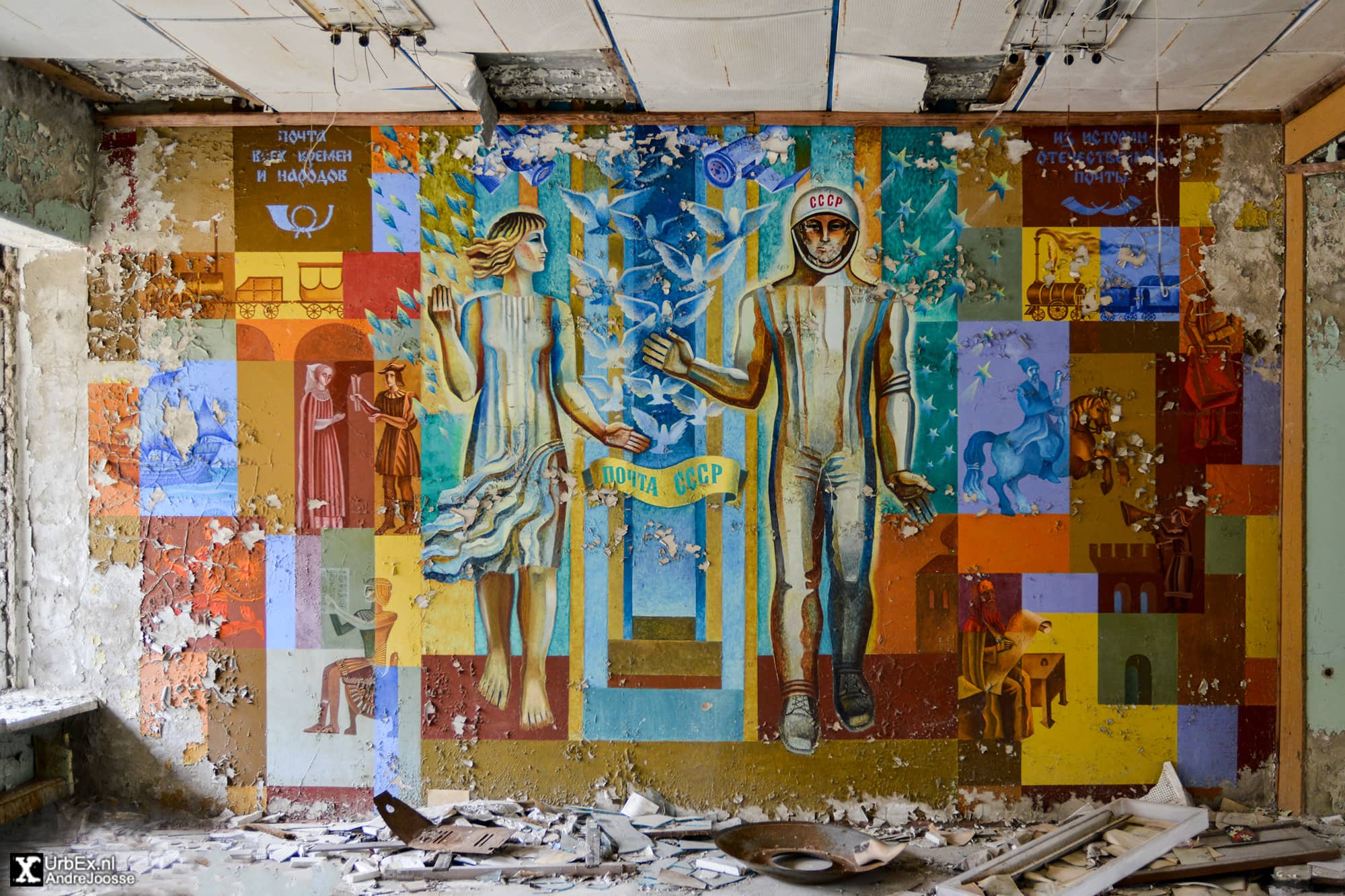
The Soviet mural inside the post office. 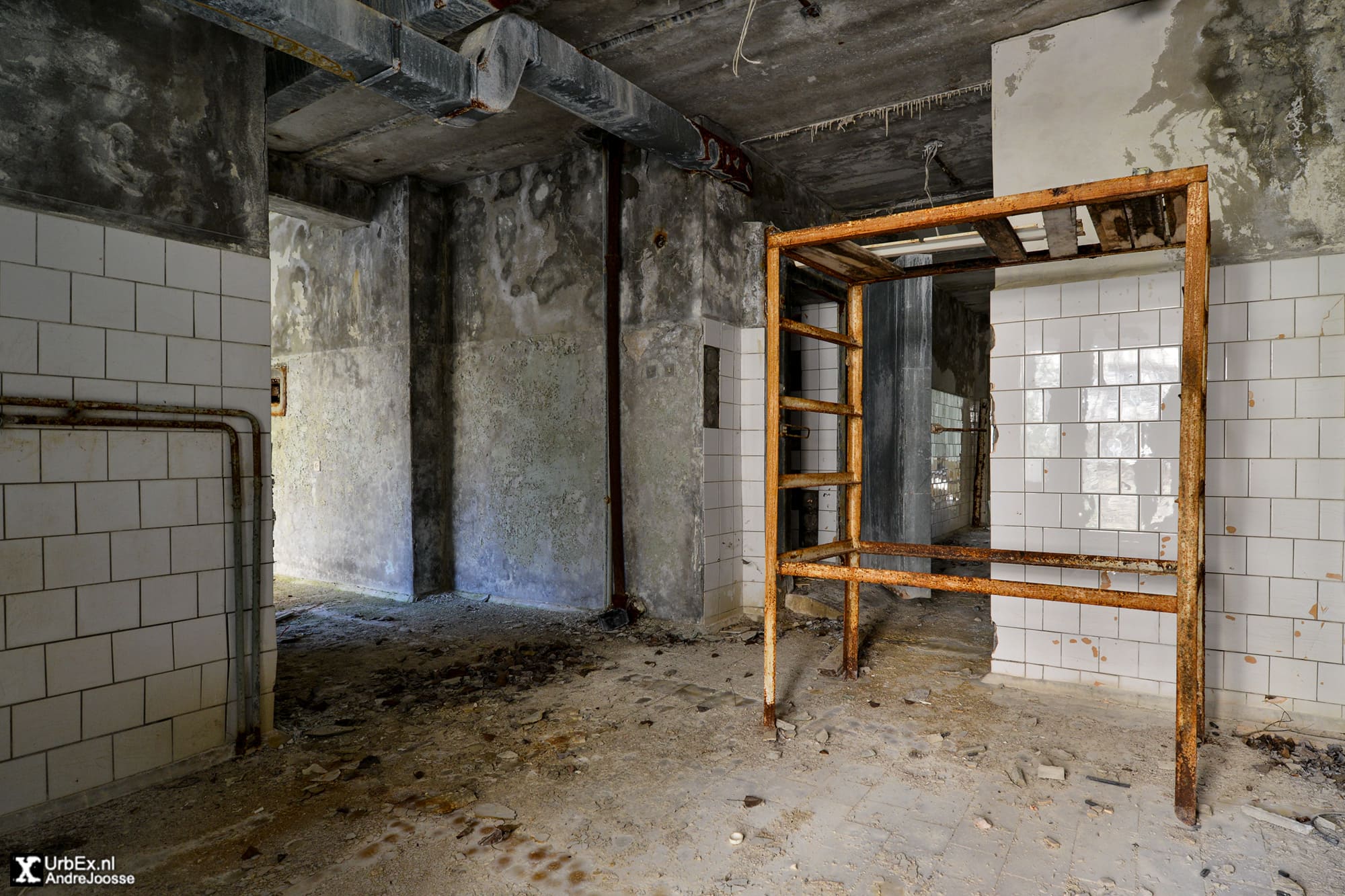
The milk shop. 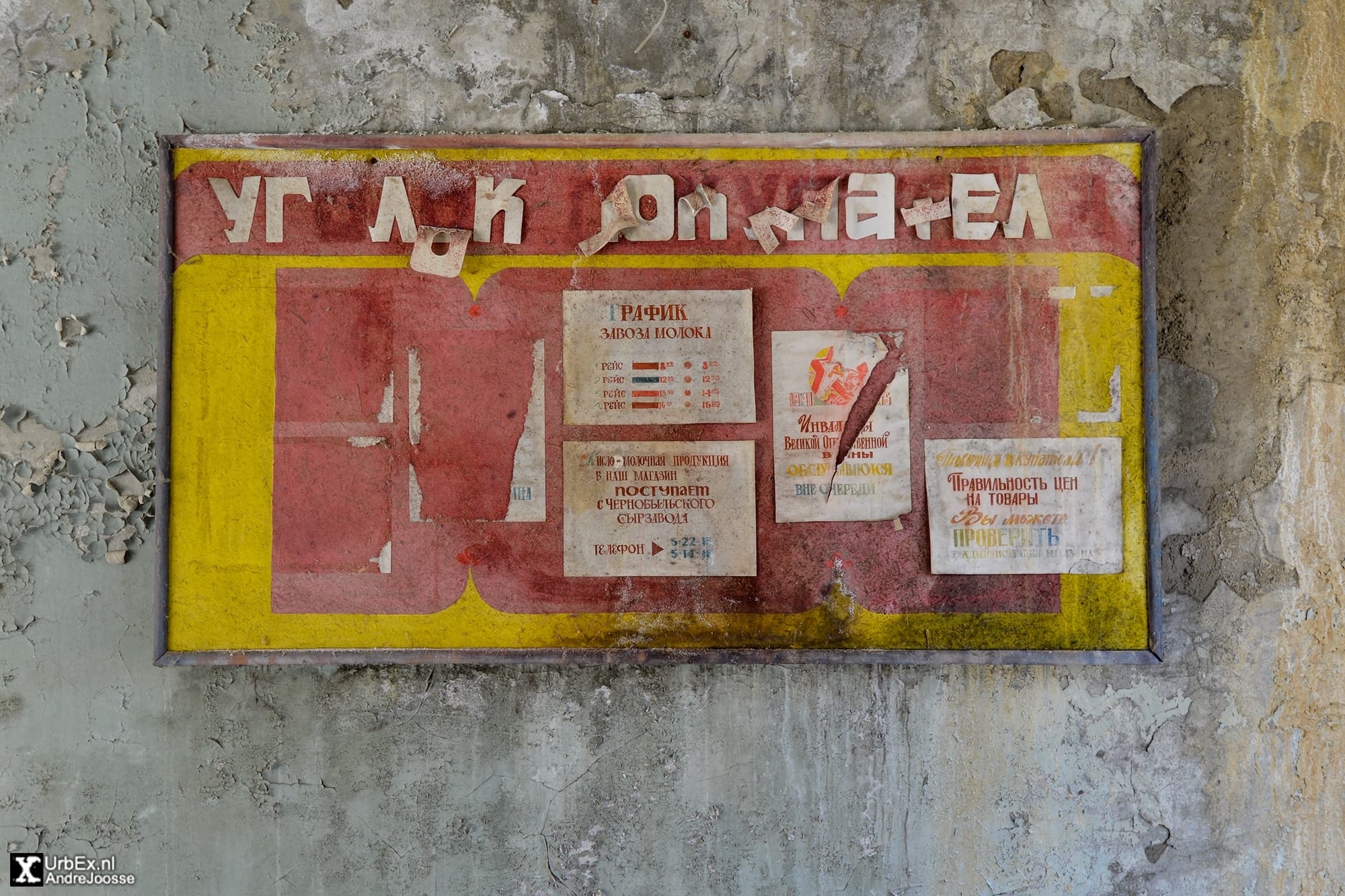
Posters inside the milk shop. 
Cafe Pripyat. 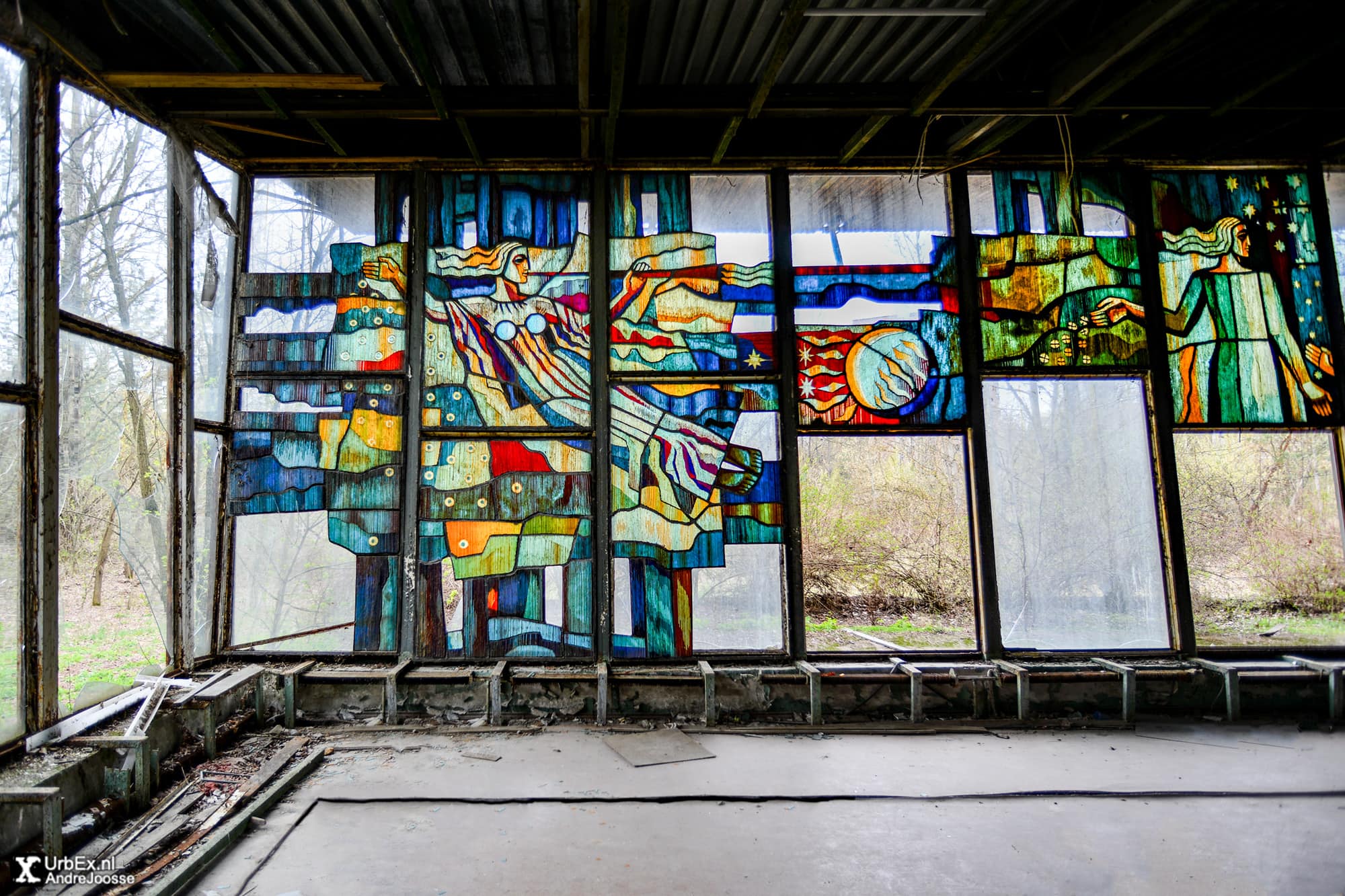
Stained glass inside the Pripyat Cafe.