Yaniv Train Station
Железнодорожная станция Янов
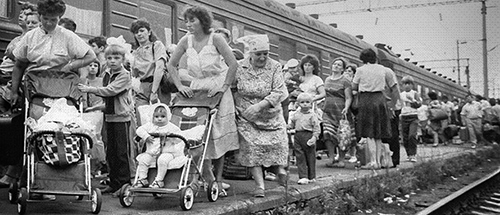
Before the Chernobyl disaster, this ‘Yaniv Railway Station’ belonged to the Southwestern Railways in Ukraine. It was mainly a freight station and shunting yard. But the station also had a platform for passenger trains. Also the line was part of the long-distance express train Moscow–Khmelnytskyi.
The station, built in 1925, is located on the Chernigov-Ovruch railway near the city of Pripyat in Ukraine. Yaniv railway station is named after the isolated village that it once served. This small village, in which about a hundred people lived, was eventually demolished after the Chernobyl disaster in 1986.
After the disaster
During the reconstruction of the Chernigov railway line in 1986-1987, the station and the track from Yaniv to Slavutich were electrified to provide services to the Chernobyl personnel and contractors. During the 2000s one of the tracks passing through Yaniv has been restored and upgraded. It was used during the construction work of Shelter-2, a new sarcophagus for the Chernobyl Nuclear Power Plant.
Chernobylservis
At the moment, the line is not used and partially dismantled. Entry to the station building is now sealed off, but in fact the site is not completely abandoned. At the present time the station is owned by the state enterprise ‘Chernobylservis’. Also some of the old carriages are used as a home for metal workers.
At the present time the rail yard and what’s left of the platform are still accessible. There is one main railroad track, three shunting tracks and several maintenance tracks for storing old and rusty rolling stock.


The station is located on the Chernigov-Ovruch railway 

There is one main railroad track, three shunting tracks and several maintenance tracks. 
Two rusty trains, abandoned after the Chernobyl disaster. 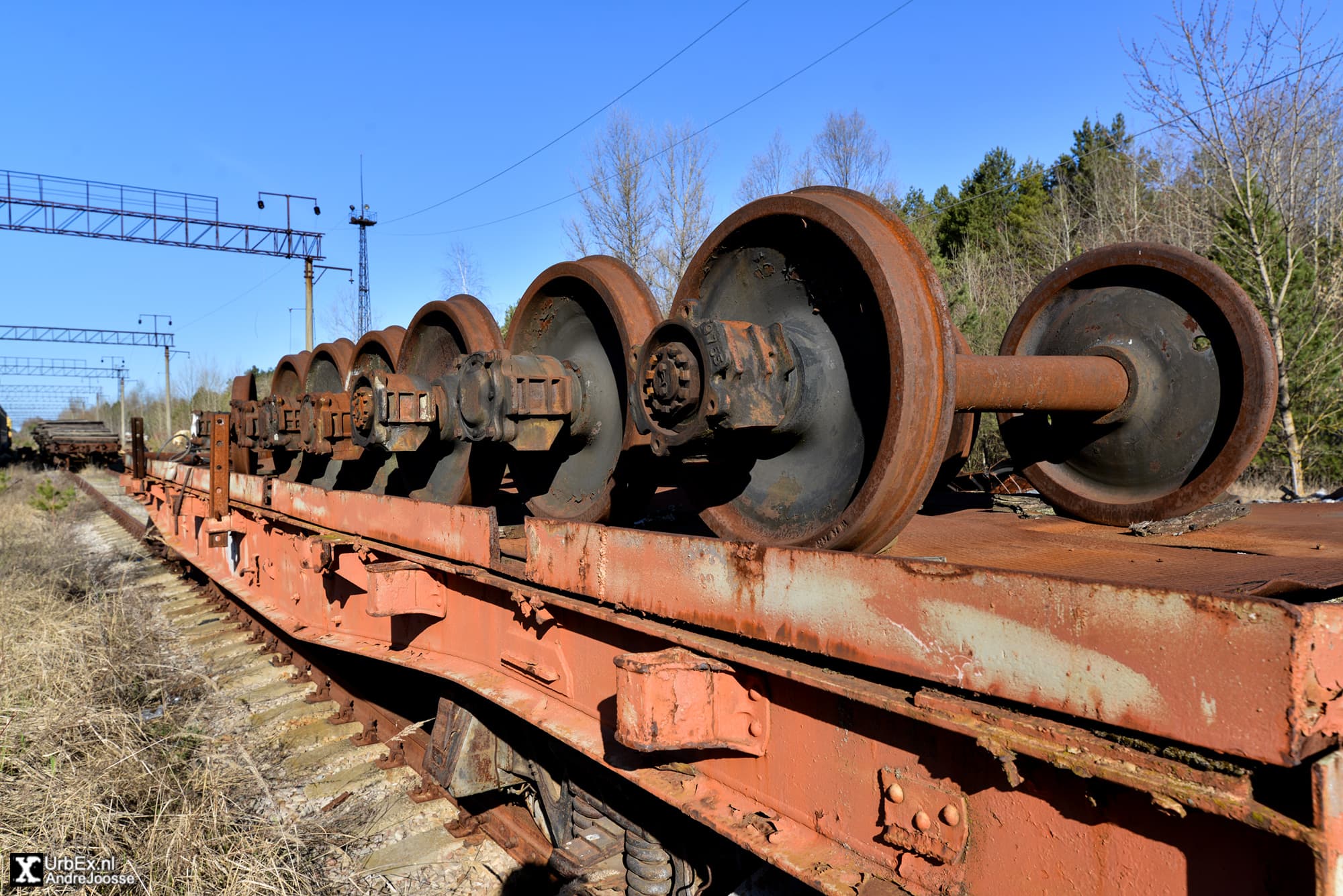
Rusty rolling stock. 
The green locomotive. 
The abandoned metal works at the station. 
‘Железнодорожная станция Янов’. 
Old buildings near the train station. 
Crane on a train. 
Work train. 
Coca Cola. 
‘CCCP’. 
The blue train. 
The green train. 
The nose of the green train. 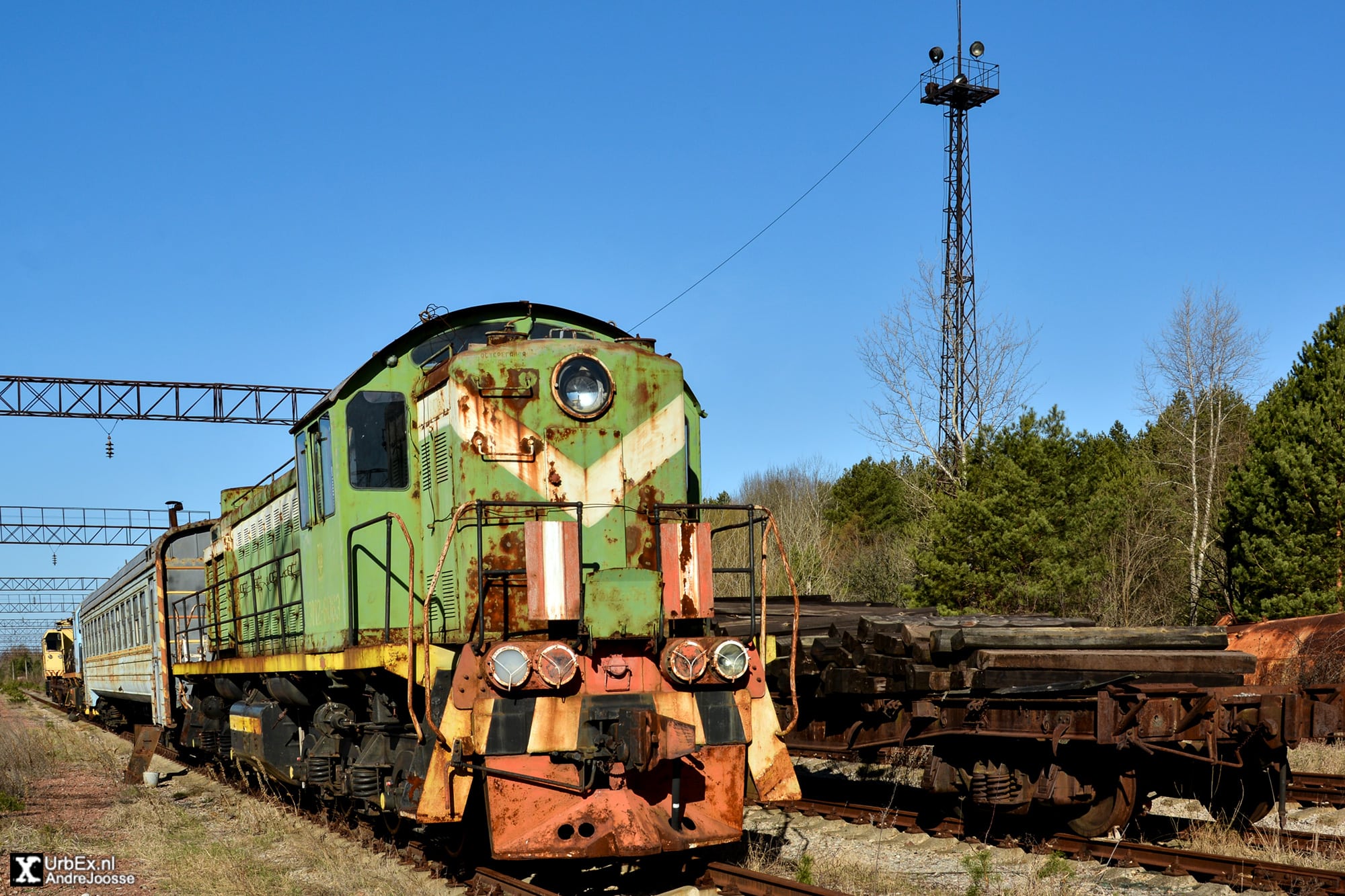
Yaniv train station shunting yard. 
Old trains rusting away.