Pripyat Secondary School № 2
Припять средняя школа № 2

Pripyat Secondary School № 2 is one of the five secondary schools in the city Pripyat, located in 29 Kurchatova Street. The city was founded in 1970, so it was a young city with many young people and many children. It had not only the designation as a city of nuclear scientists, Pripyat was also designed as a major transshipment point at the crossroads of transport arteries. The need for educated people was high.
The small city had 15 pre-schools for 4980 kids. This building, Secondary School № 2 is one of the five secondary schools that could educate up to 6786 students. After the children graduated from this school, they could study at the vocational school in Pripyat, the technical school could teach 600 students. The course of school training in the Soviet Union lasted 10 years.
Most of the buildings in the city are practically empty. But not the schools. School books and class magazines were clearly of no value to looters, and city residents were more worried about saving at least something from their personal property. That is why the vast majority of educational equipment has remained untouched in the schools of Pripyat.
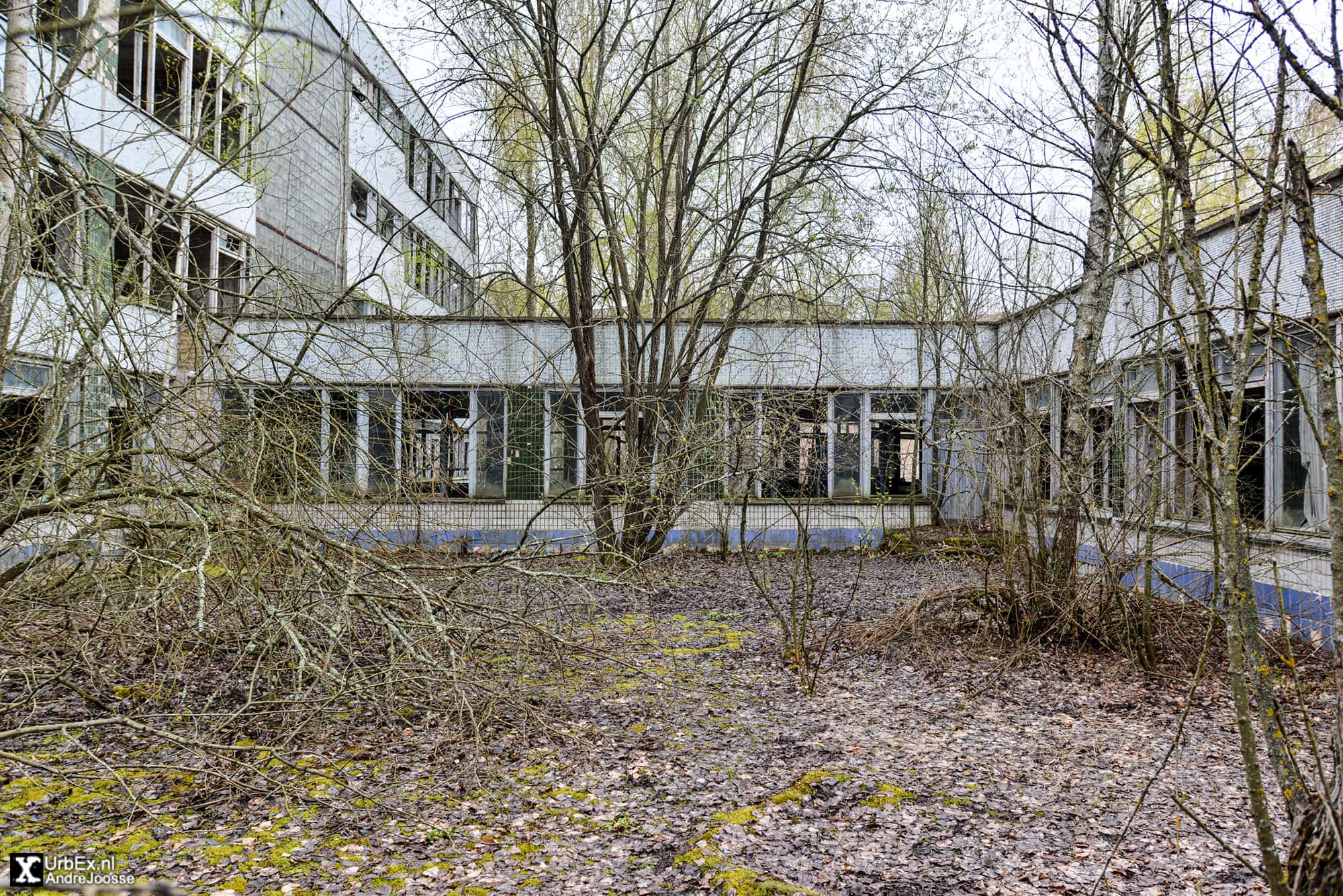

School № 2, nature takes over. 

Coat rack at the school entree. 
Art at the school walls. 
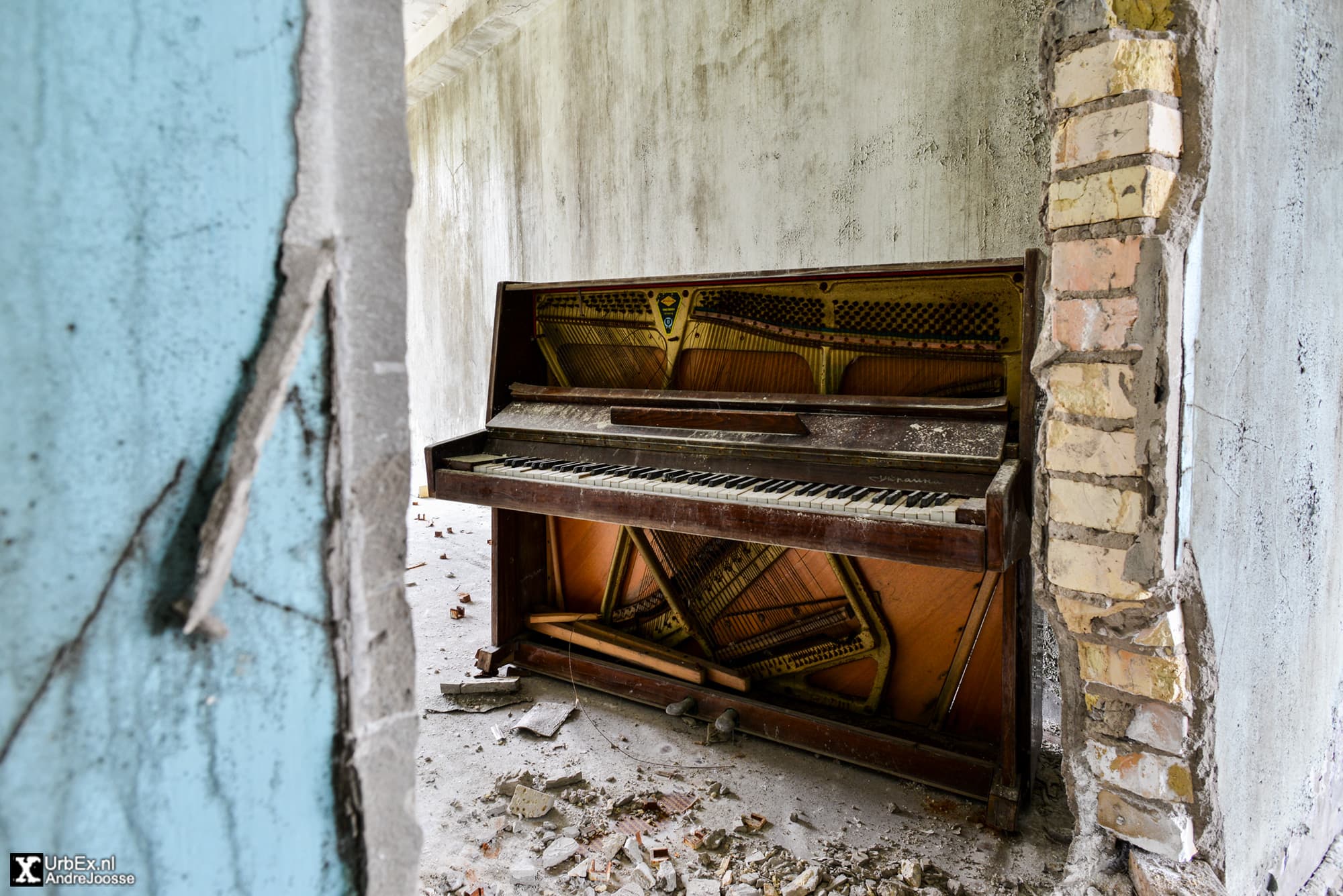
Music lessons were mandatory. 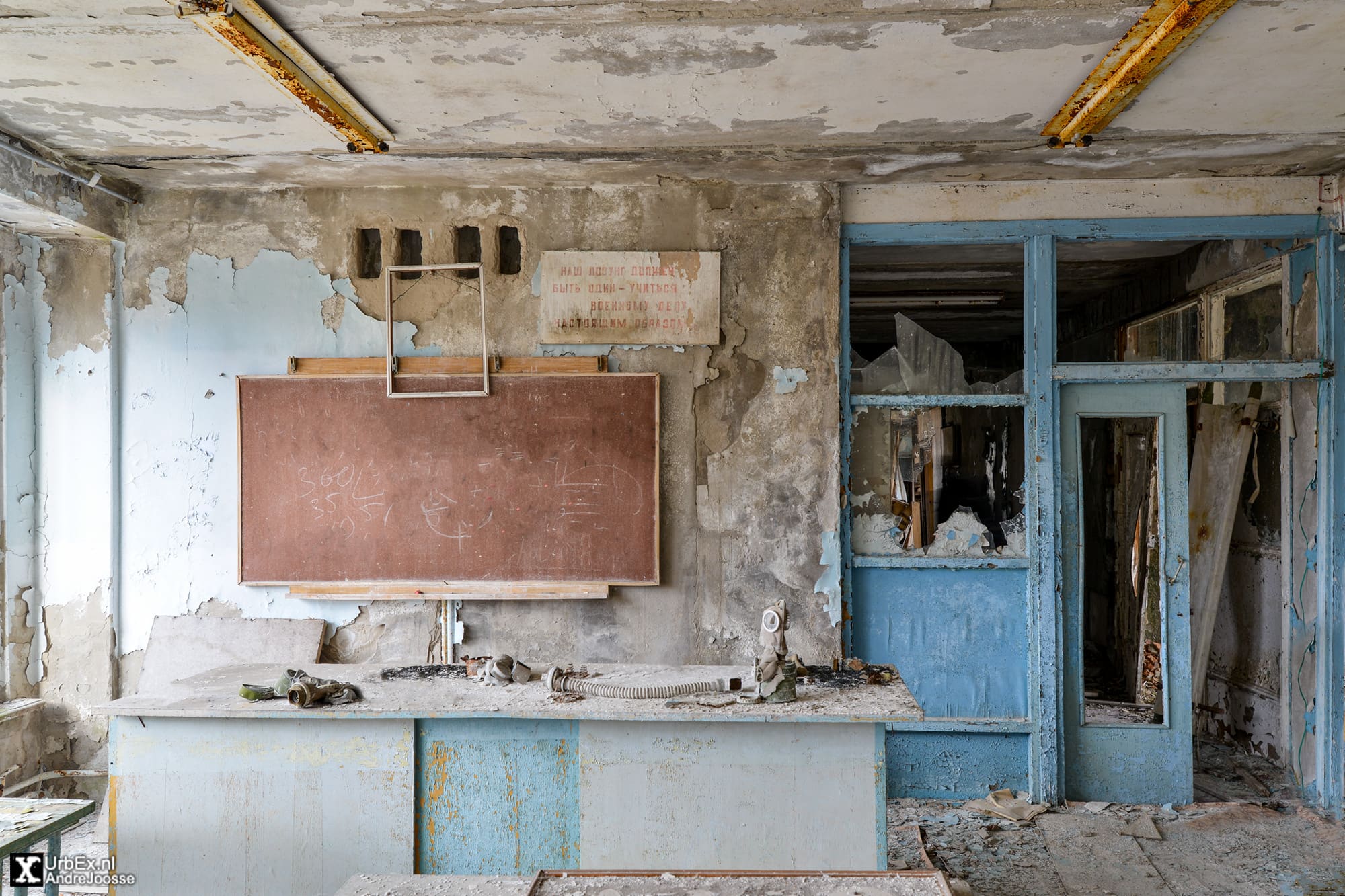
Abandoned classroom. 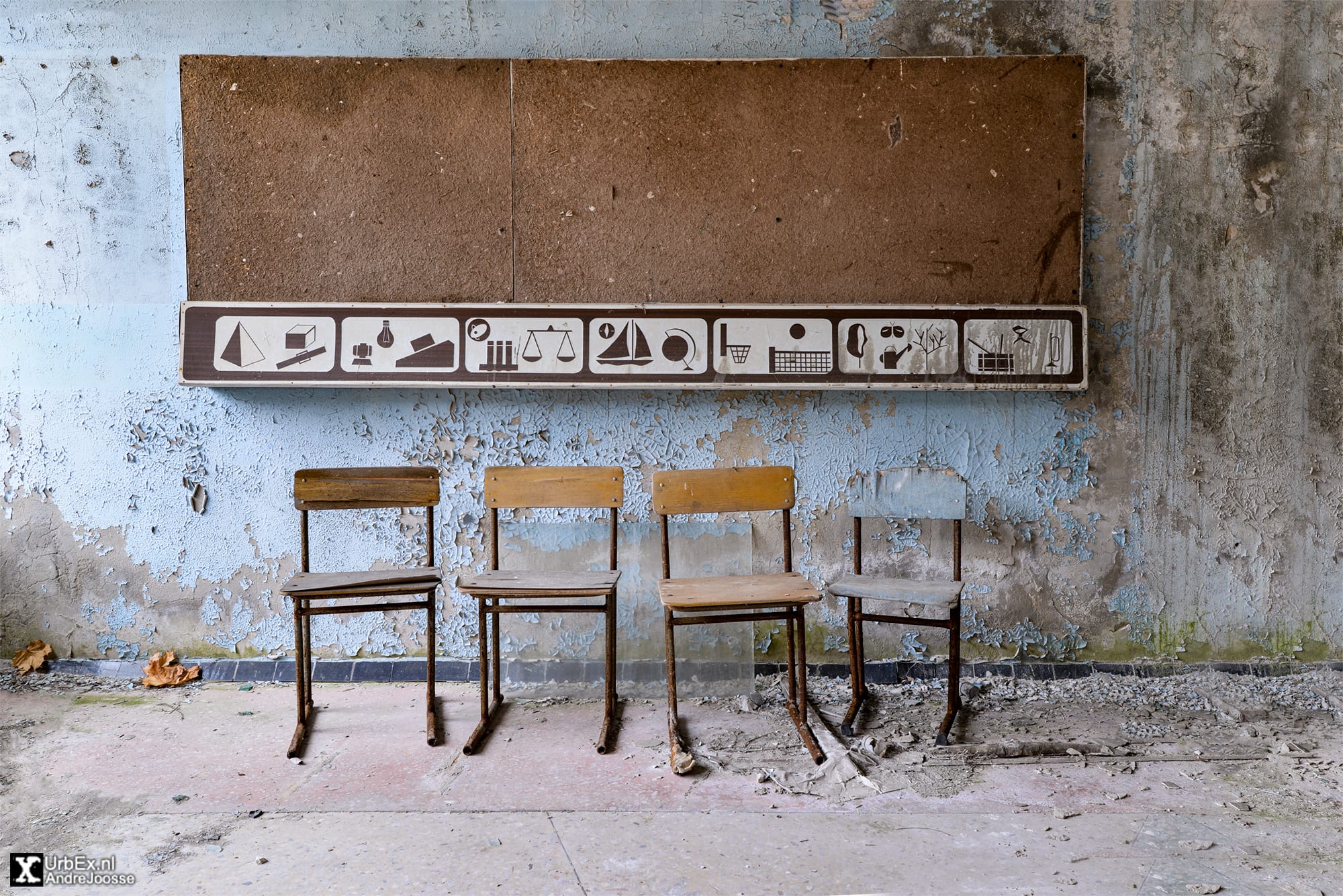
Abandoned classroom. 
Educational posters. 
Educational posters. 
Decaying hallway. 
Empty classroom. 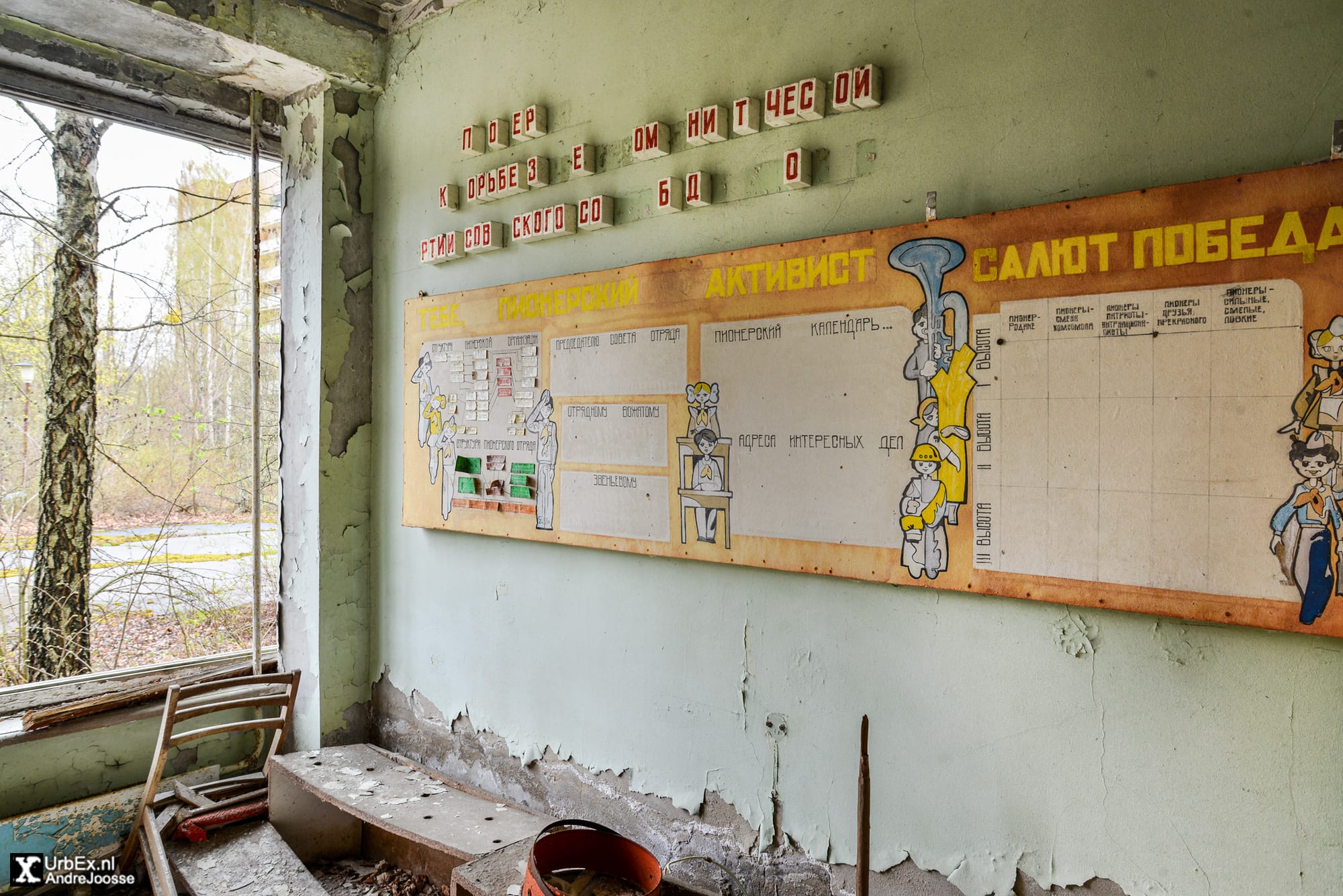
Stand of visual agitation. 
Soviet propaganda. 
Stand of visual agitation. 
Stand of visual agitation. 
Classroom on the first floor. 
Books. 
Rapport. 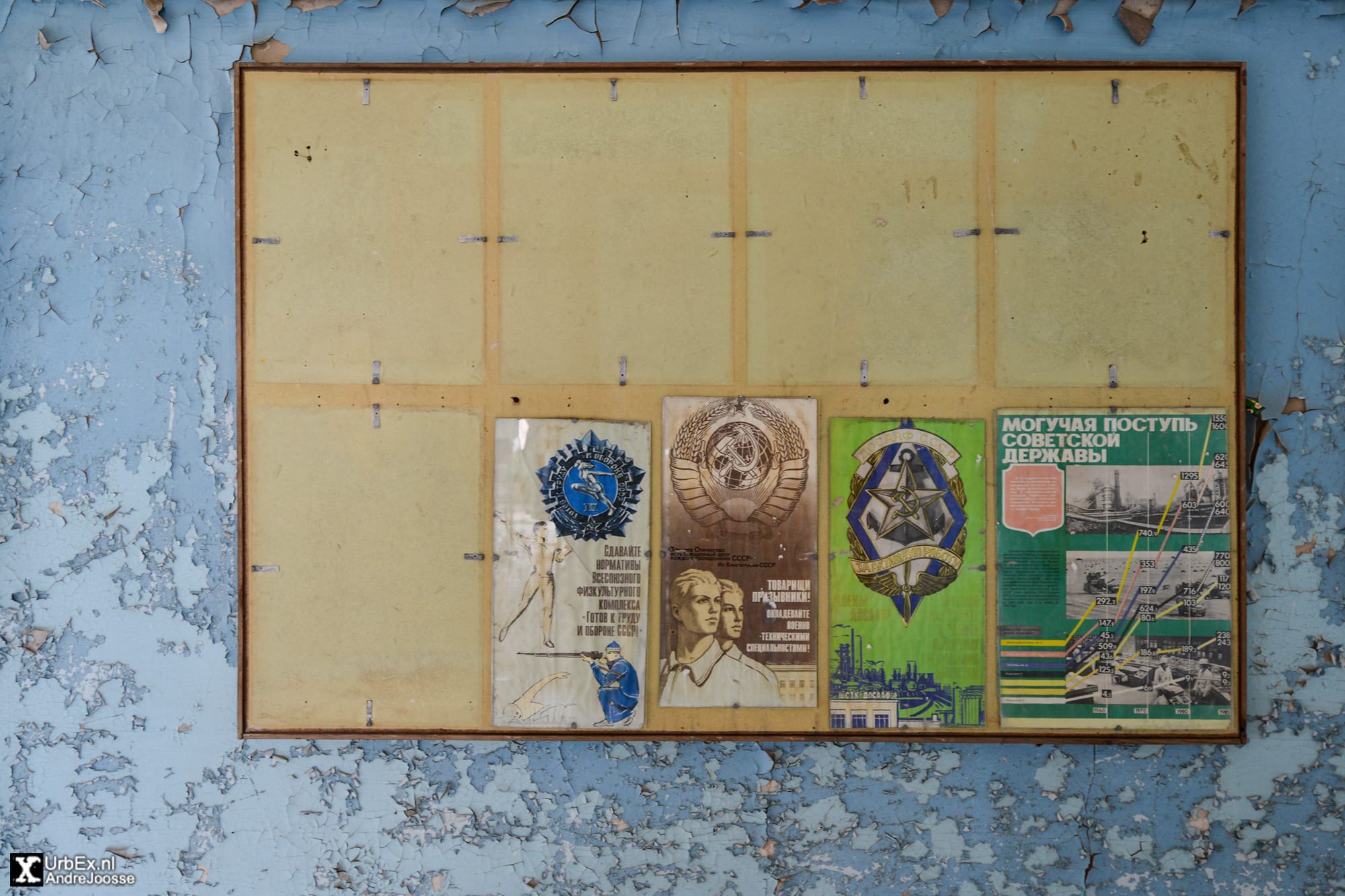
Great Soviet designed posters. 
Survival tips. 
The school had four floors. 
Poster in the main hall. 
Soviet traffic poster. 
Healthy food is healthy life. 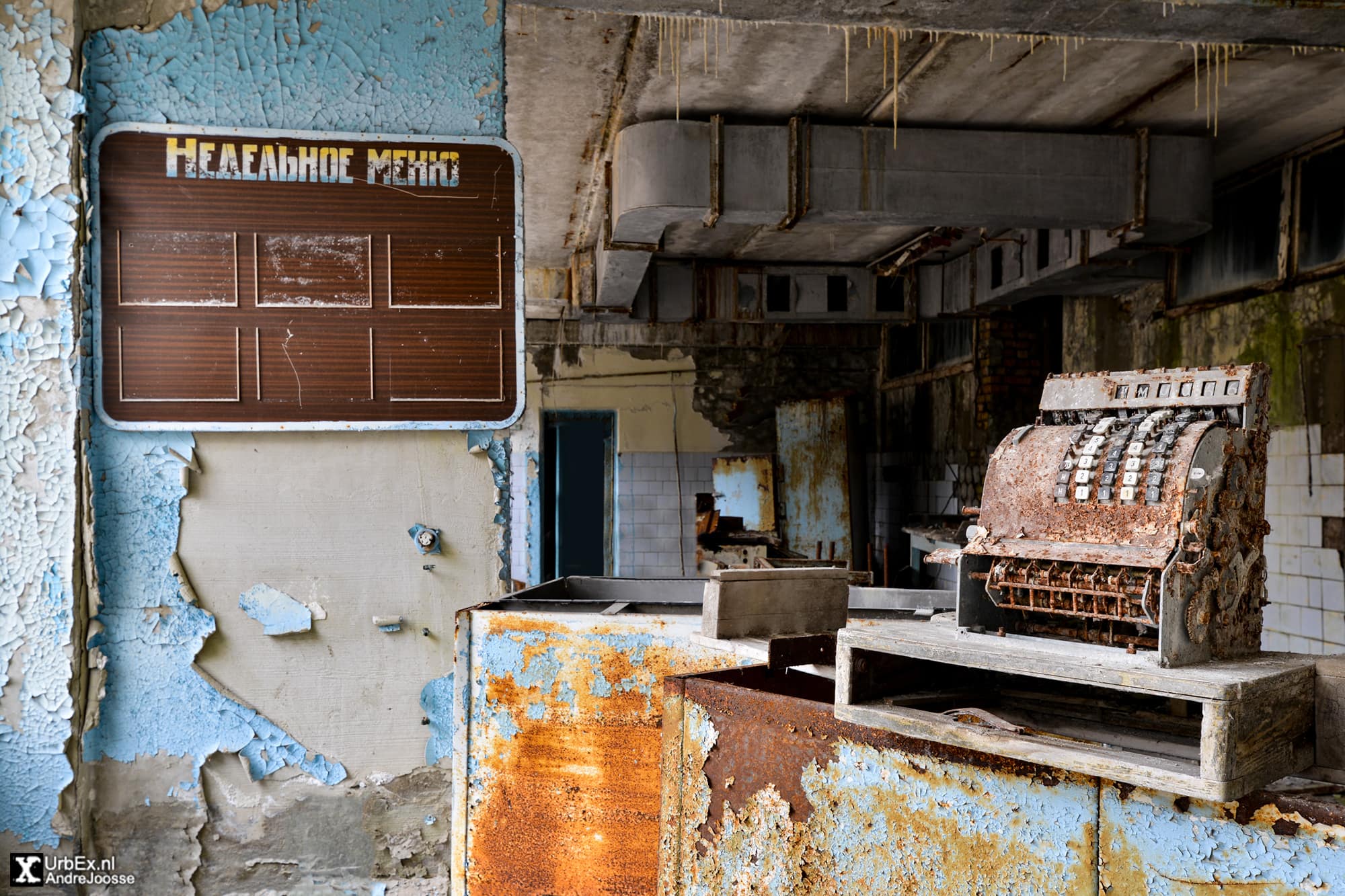
Checkout at the canteen. 
Sport announcements. 
The gym. 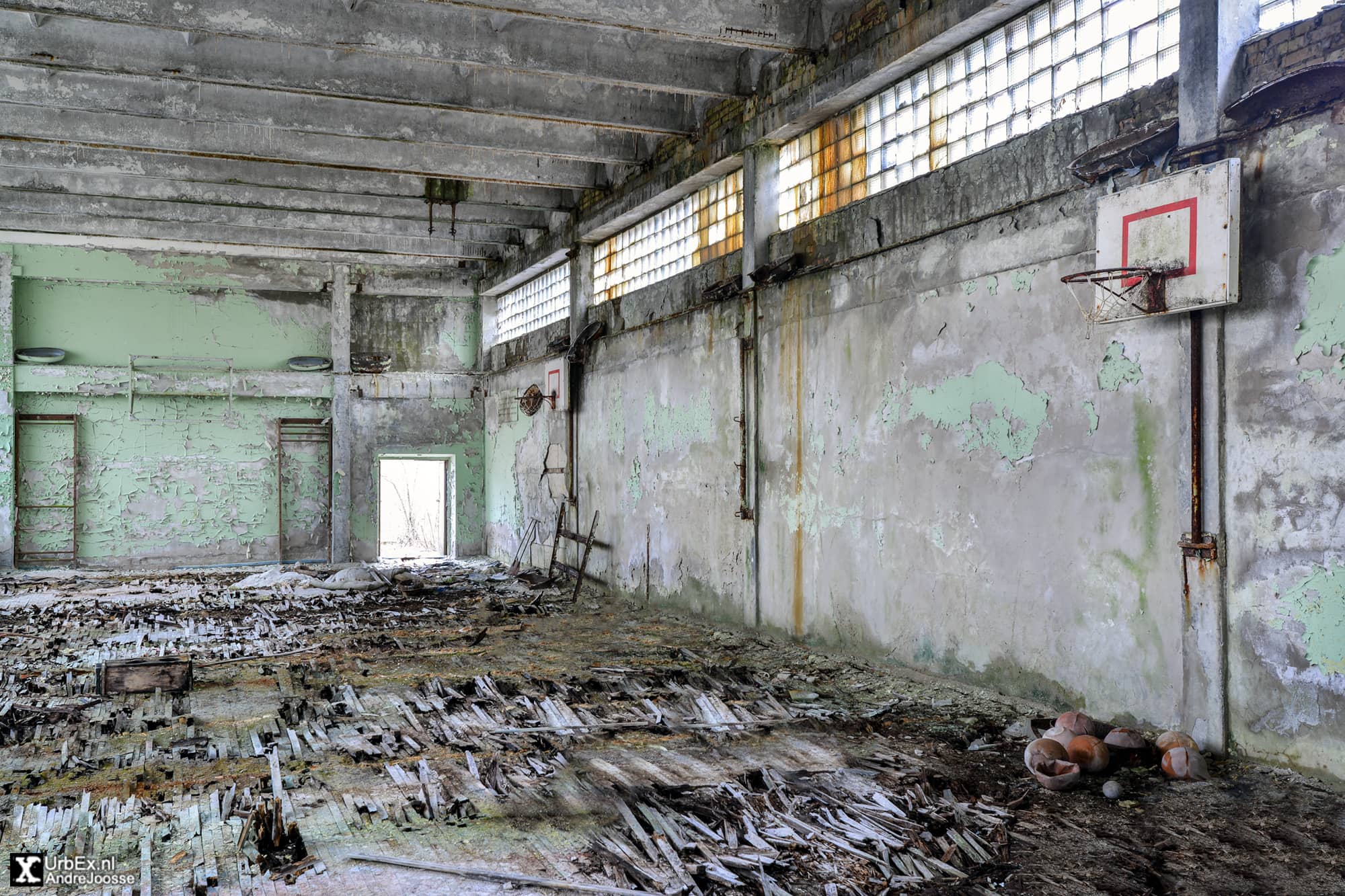
The gym. 
The winner takes it all.