Pripyat Cargo Port
Припятский грузовой порт
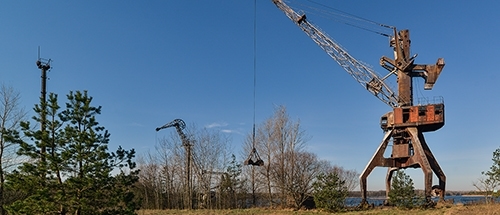
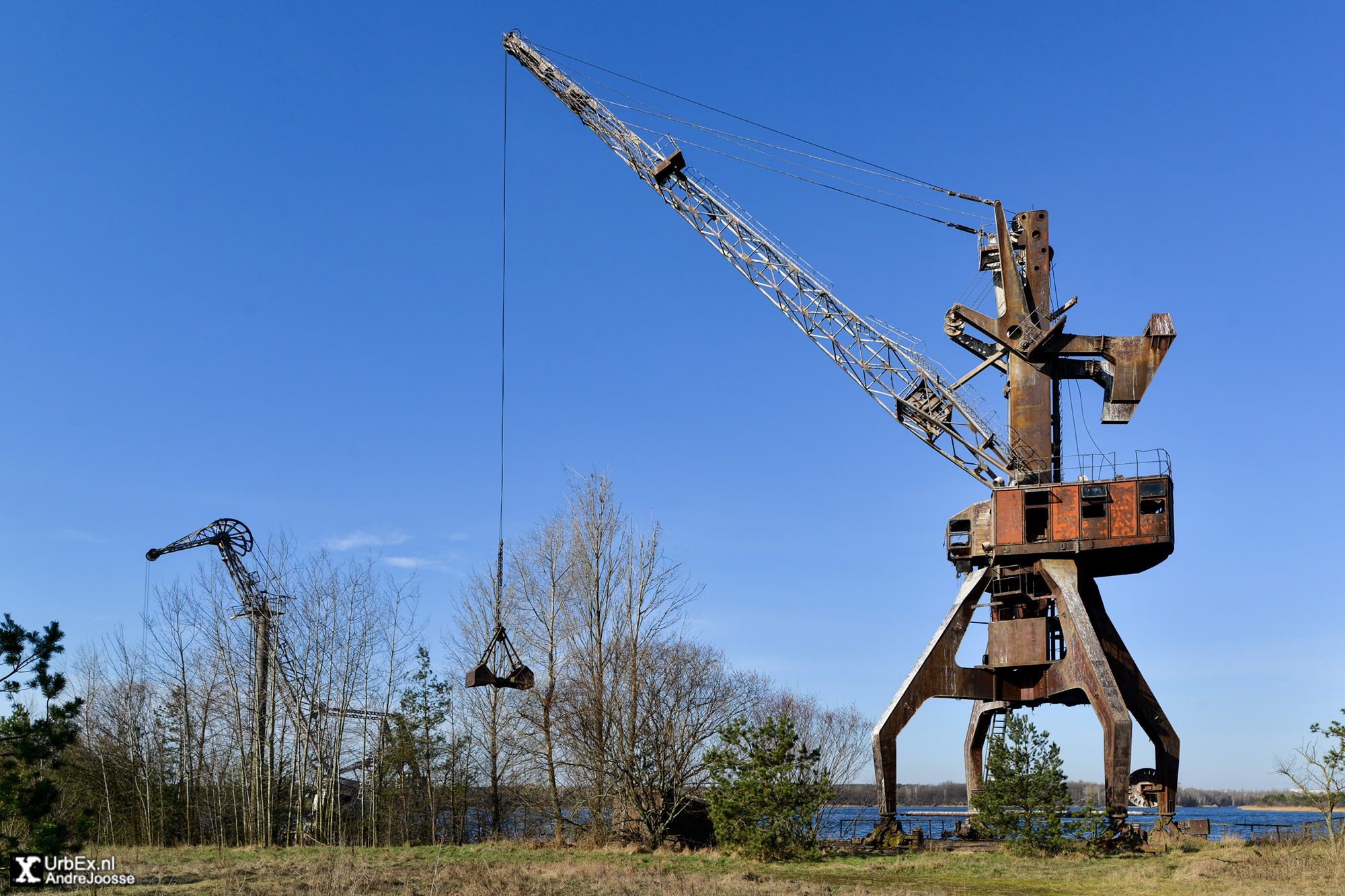
The Pripyat Cargo Port is an abandoned industrial site located east of the city Pripyat on the banks of the Yanovsky Zaton lake. The lake used to be connected to the river Pripyat. The cargo port was built for receiving materials for the construction of new living quarters in Pripyat and the construction of Reactor No. 5 and 6 of the Chernobyl Nuclear Power Plant.
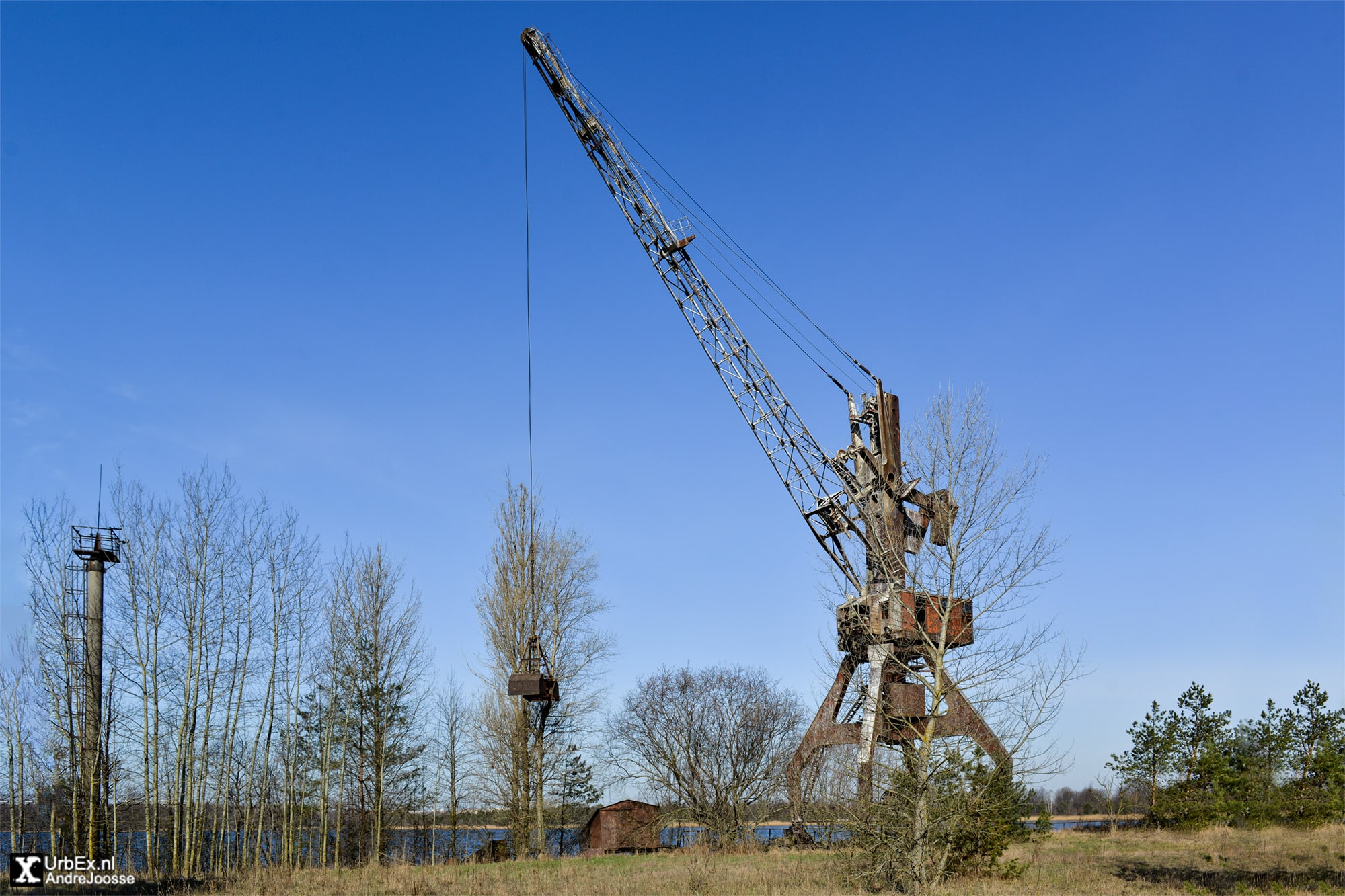
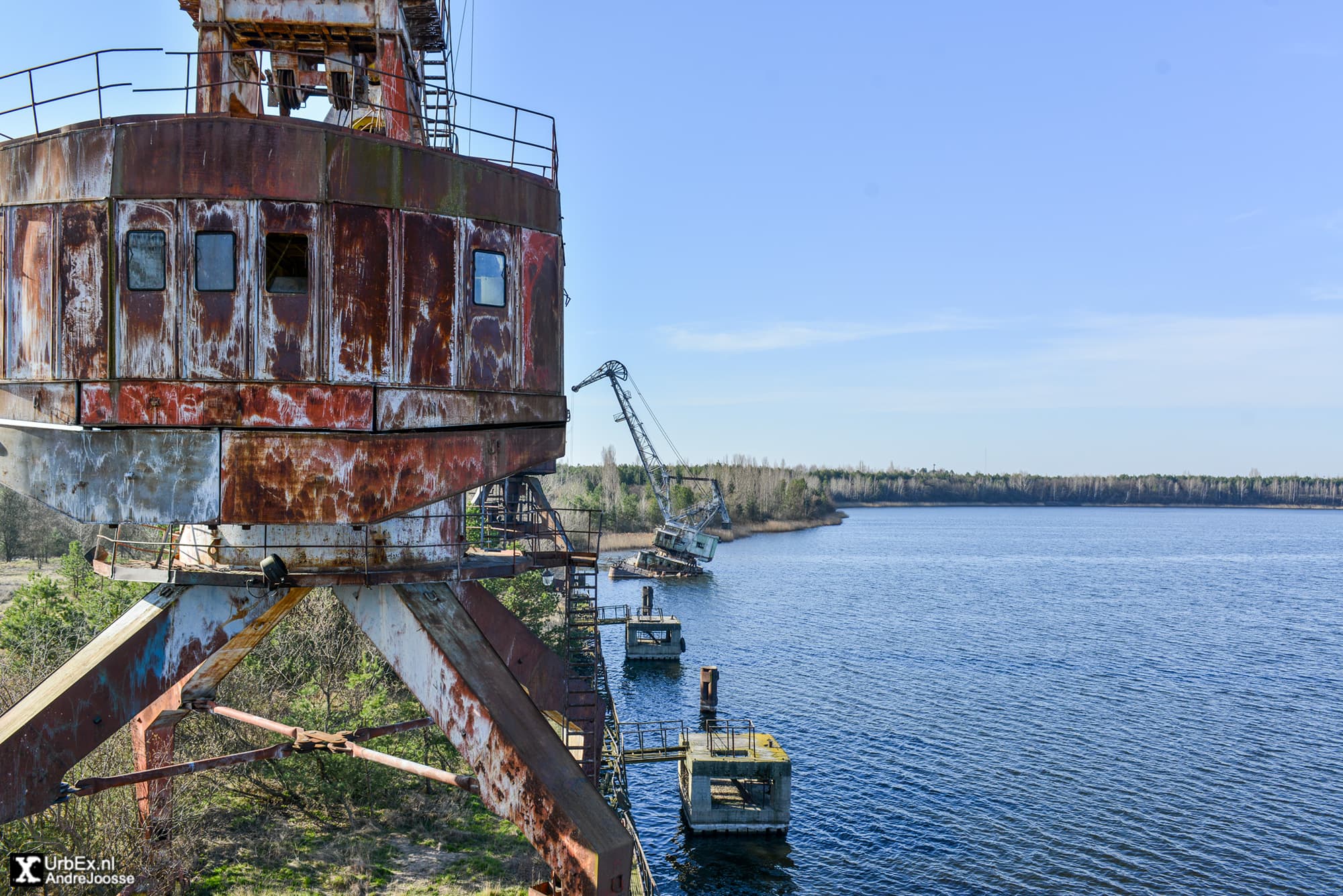
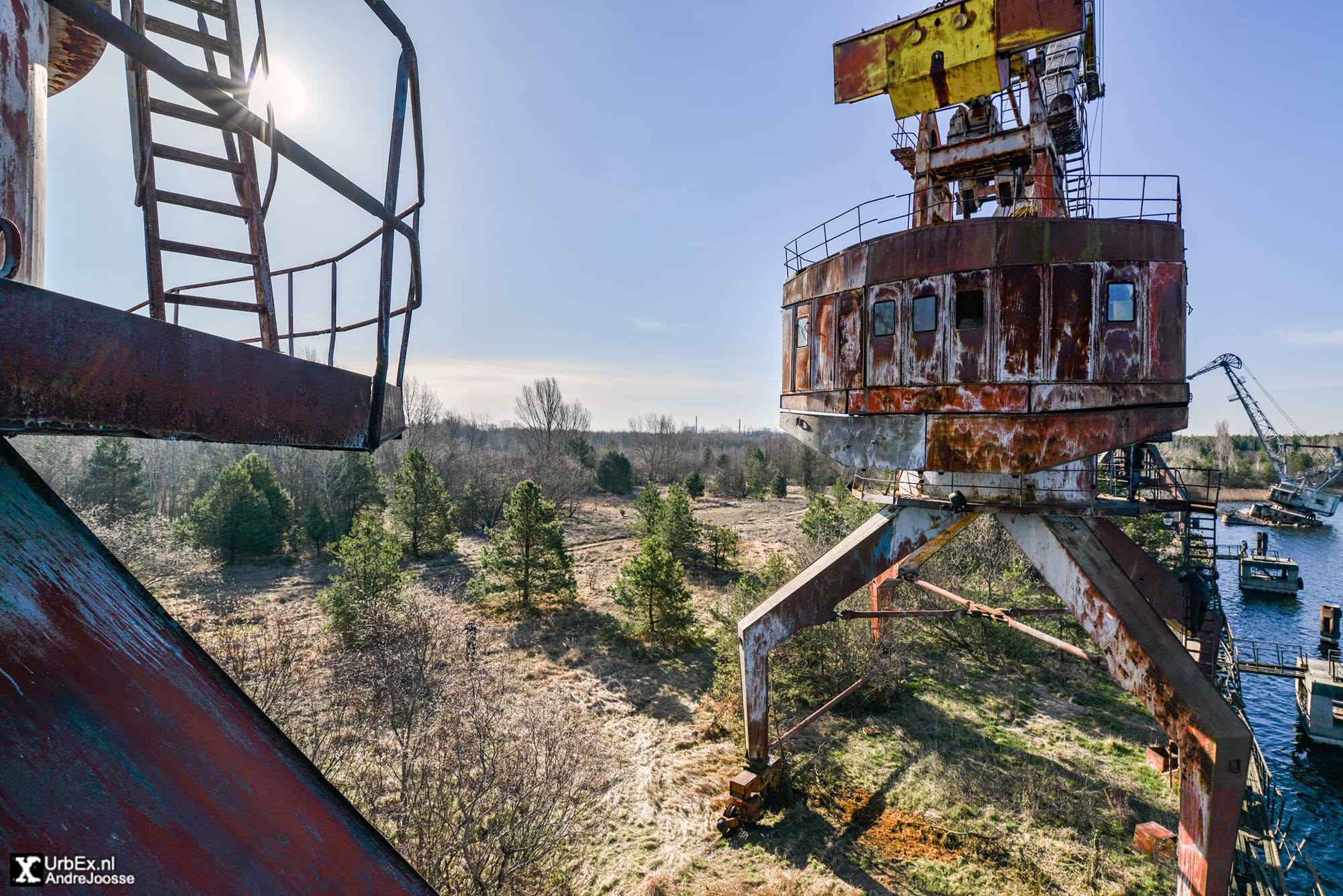
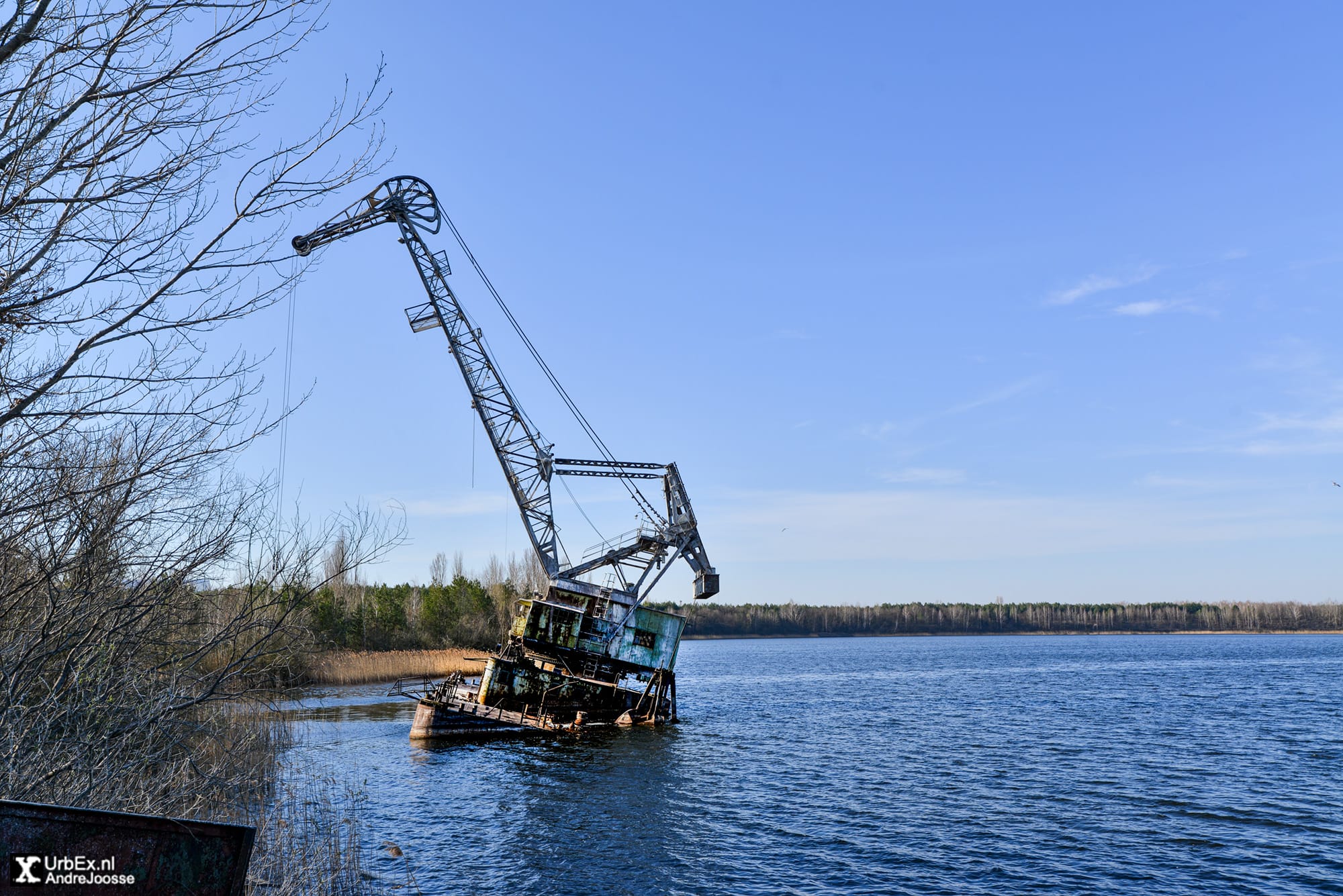
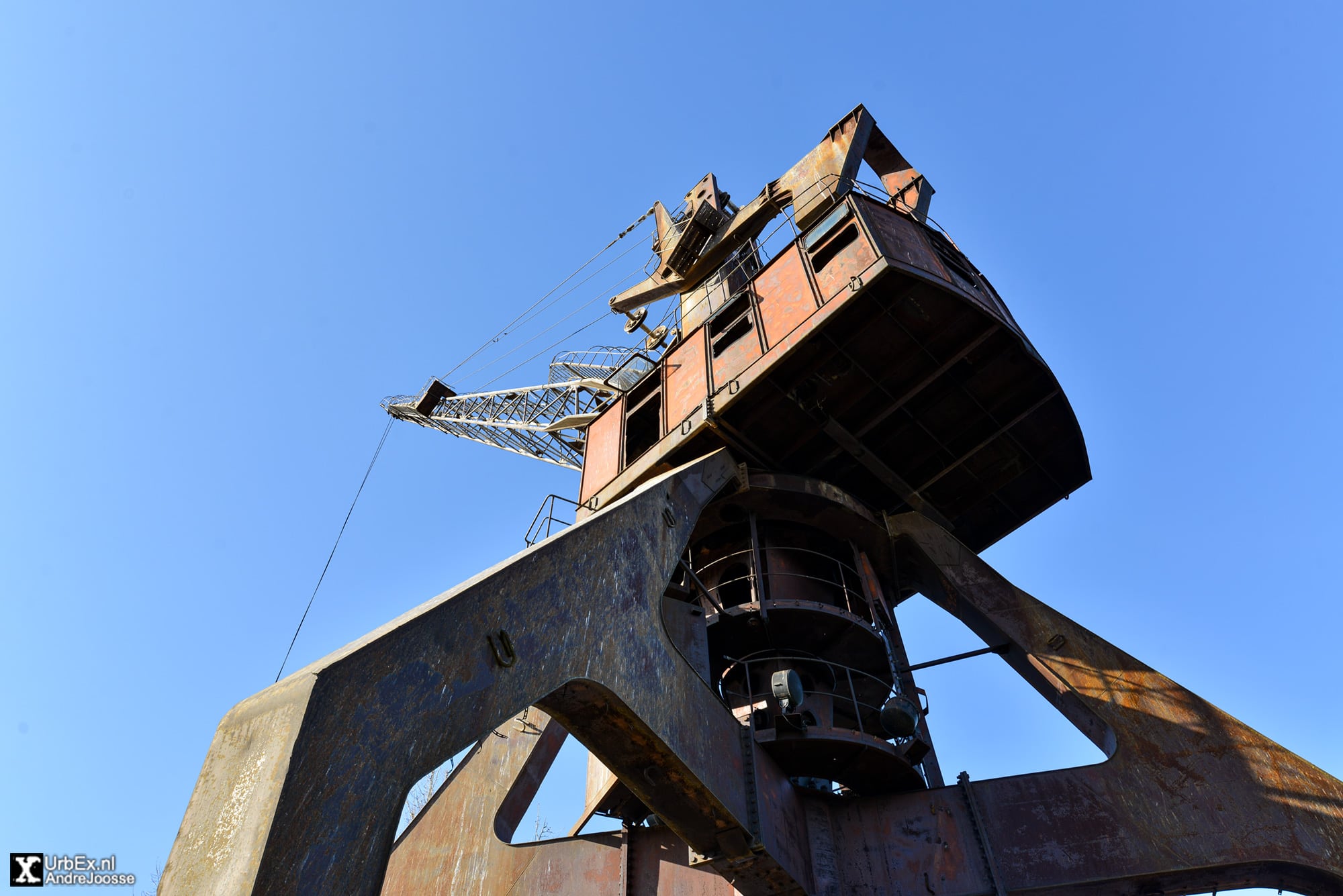
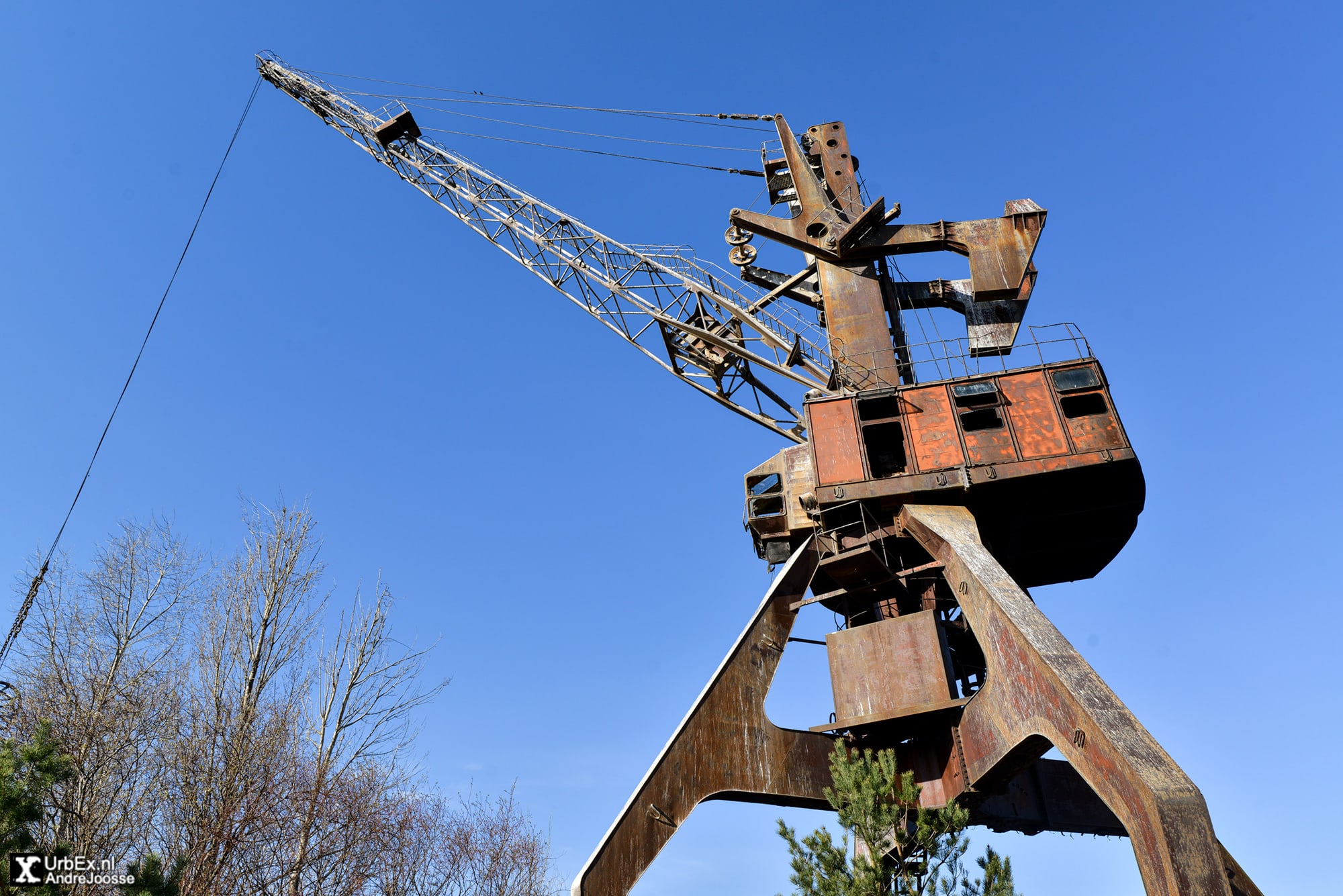
There are four giant cranes in the port. Three of the type KPP-10/12.5 on the shore, and one floating crane in the water. KPP in Russian stands for ‘bulk-handling crane’. The 10/12.5 indicate the load capacity of the crane, namely a load capacity of 10 tons with a grab and 12.5 tons on a hook. The machines are 30 meters high.
After the Chernobyl disaster, the port was used for rescue work on the heavily damaged Reactor No. 4. Dry-mixed concrete and other materials were unloaded here. It was used in the construction of the sarcophagus, a concrete shell to limit radioactive contamination of the environment. The original Russian name is Объект Укрытие which means sheltering or covering. The sarcophagus locked in 200 tons of radioactive lava-like corium, 30 tons of highly contaminated dust and 16 tons of uranium and plutonium.
Also, with the help of these cranes, a dam was built that separates the Yanovsky Zaton lake from the Pripyat river to prevent the migration of radionuclides. After a year, in 1987, the operations in the port were terminated. According to the stories of crane operators, the radiation level inside the crane cab was many times higher than all permissible standards. Workers often felt sick at work.
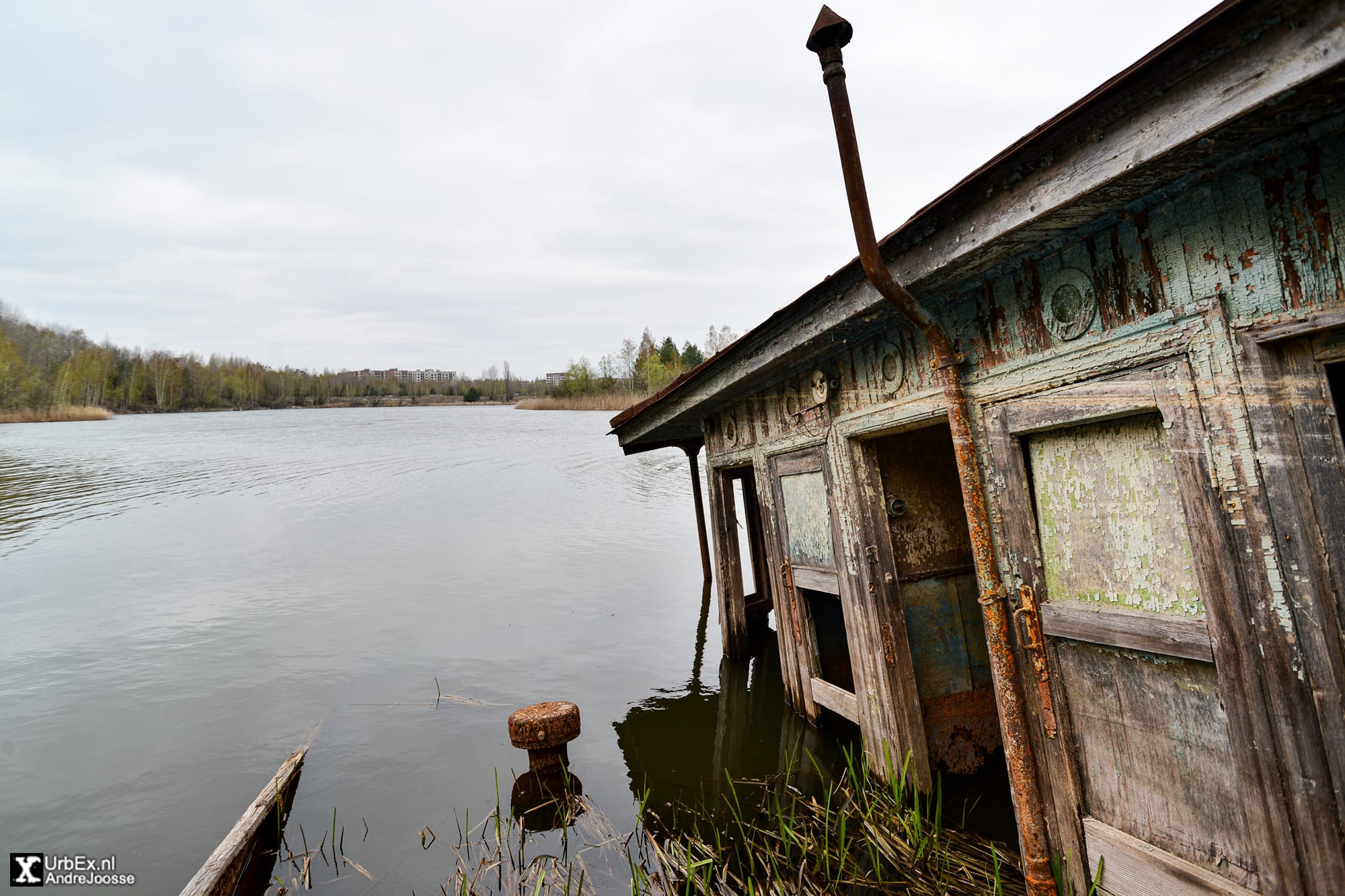
Today, a huge number of birds nest in the rusty cranes. They are in a very bad state. The floating crane already started to sink. The site was used in the game ‘STALKER: Call of Pripyat’ where it is part of the game location Zaton.