Pripyat Palace of Culture ‘Energetik’
Дворец культуры «Энергетик» Припять

Pripyat Palace of Culture ‘Energetik’ was built during the 1970s for the citizens of the town of Pripyat. It is located directly at Pripyat’s center square, Lenin Square.
Palace of Culture buildings were large community centers during the Soviet era. There were more than 137 thousand in the Soviet Union in 1987. The buildings were the meeting point for people to enjoy all kinds of recreational activities like sports and arts. Each had their own name, this one was named ‘Energetik’. It is a play on words, since it means both energetic and power plant worker. Of course the communities were also used for political indoctrination, communist propaganda posters and banners decorated the walls outside and inside.
Pripyat’s Palace of Culture was built in the early 1970s and was the pride of Pripyat. It includes a cinema, theatre and concert hall, library, gym, swimming pool, boxing ring, dancing and meeting halls and even it has a shooting range in the basement. The Edison disco gathered young people not only from all of Pripyat, but also from the surrounding area.
After the disaster, during the liquidation, Energetik was used by the liquidators as a technical room. In 2000, after the full stop of the Chernobyl Nuclear Power Plant, it was finally closed.


Palace of Culture ‘Energetik’. 
Mural at the entrance. 
Mural at the entrance. 

Palace of Culture mural. 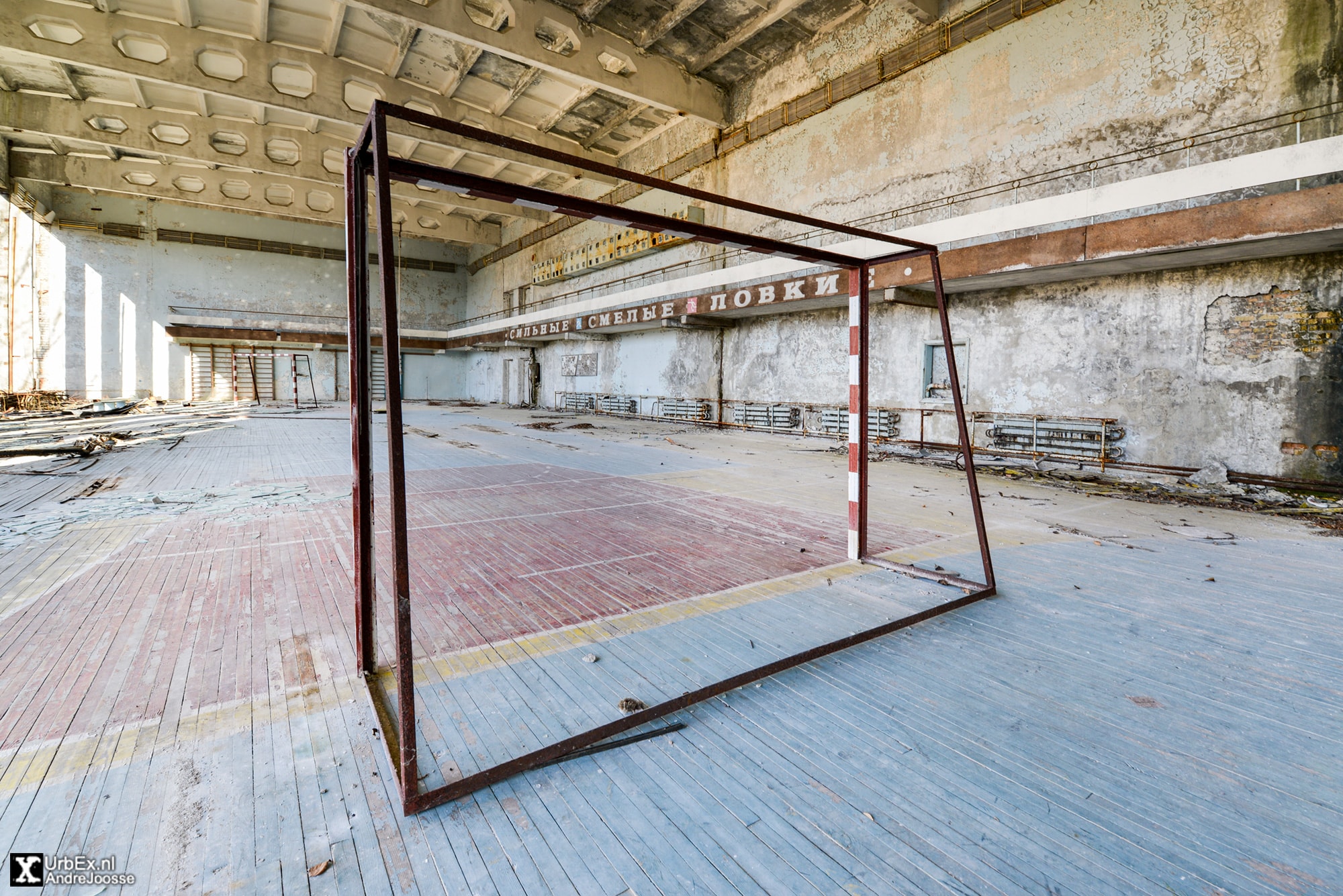
The abandoned gym in Pripyat. 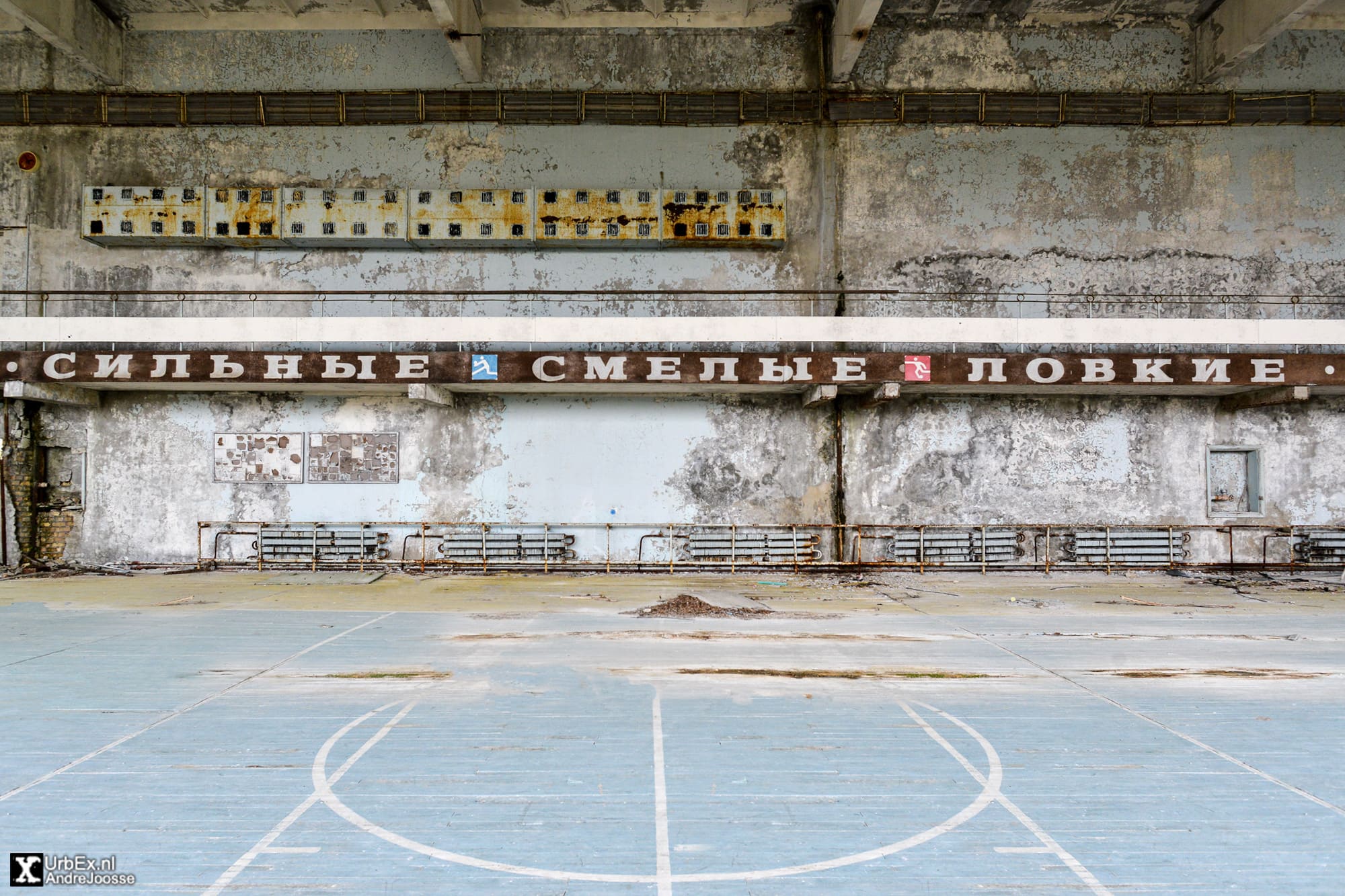
The gym. 
Lost shoe inside the Pripyat gym. 
The gym. 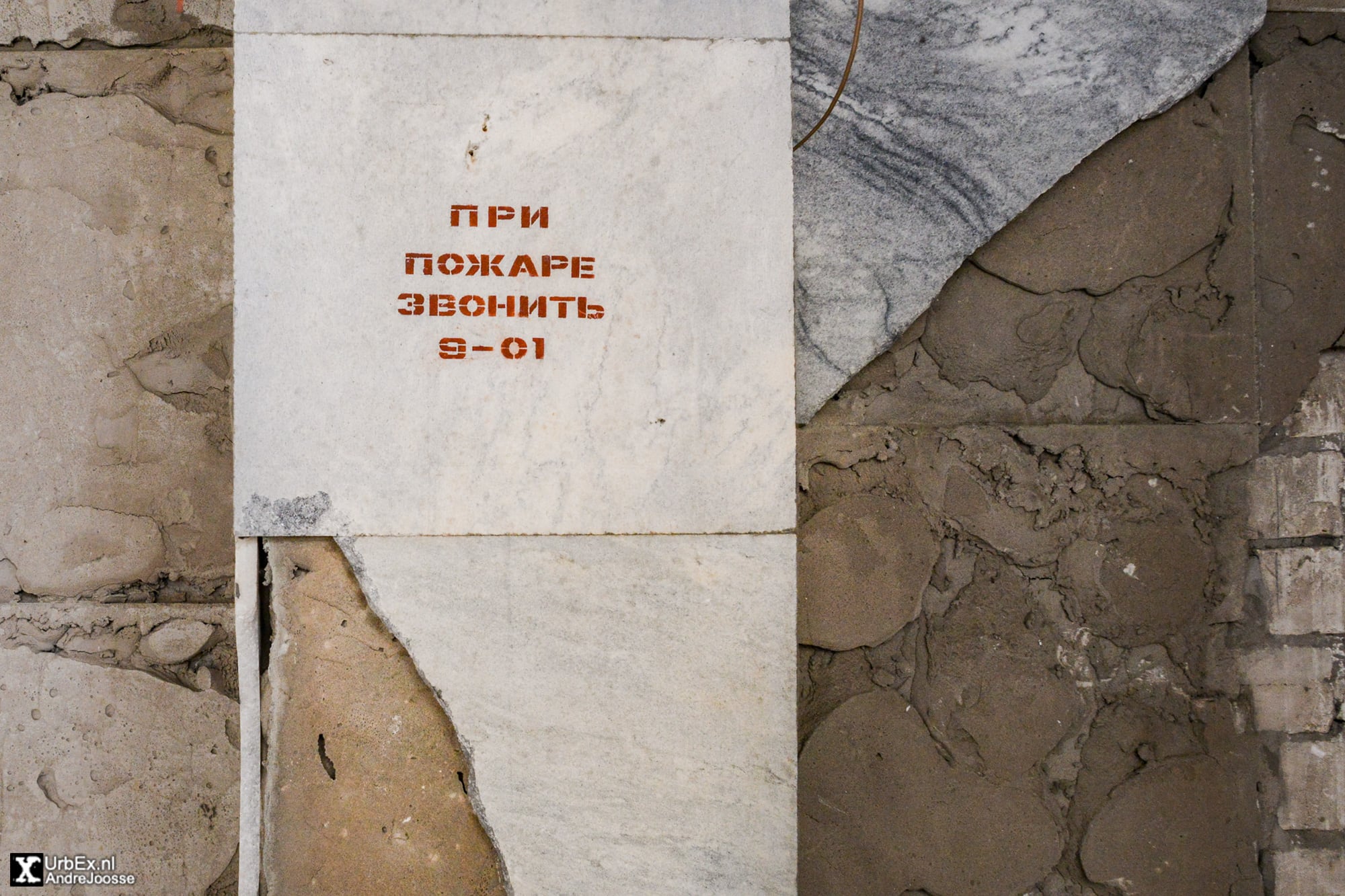
Staircase. 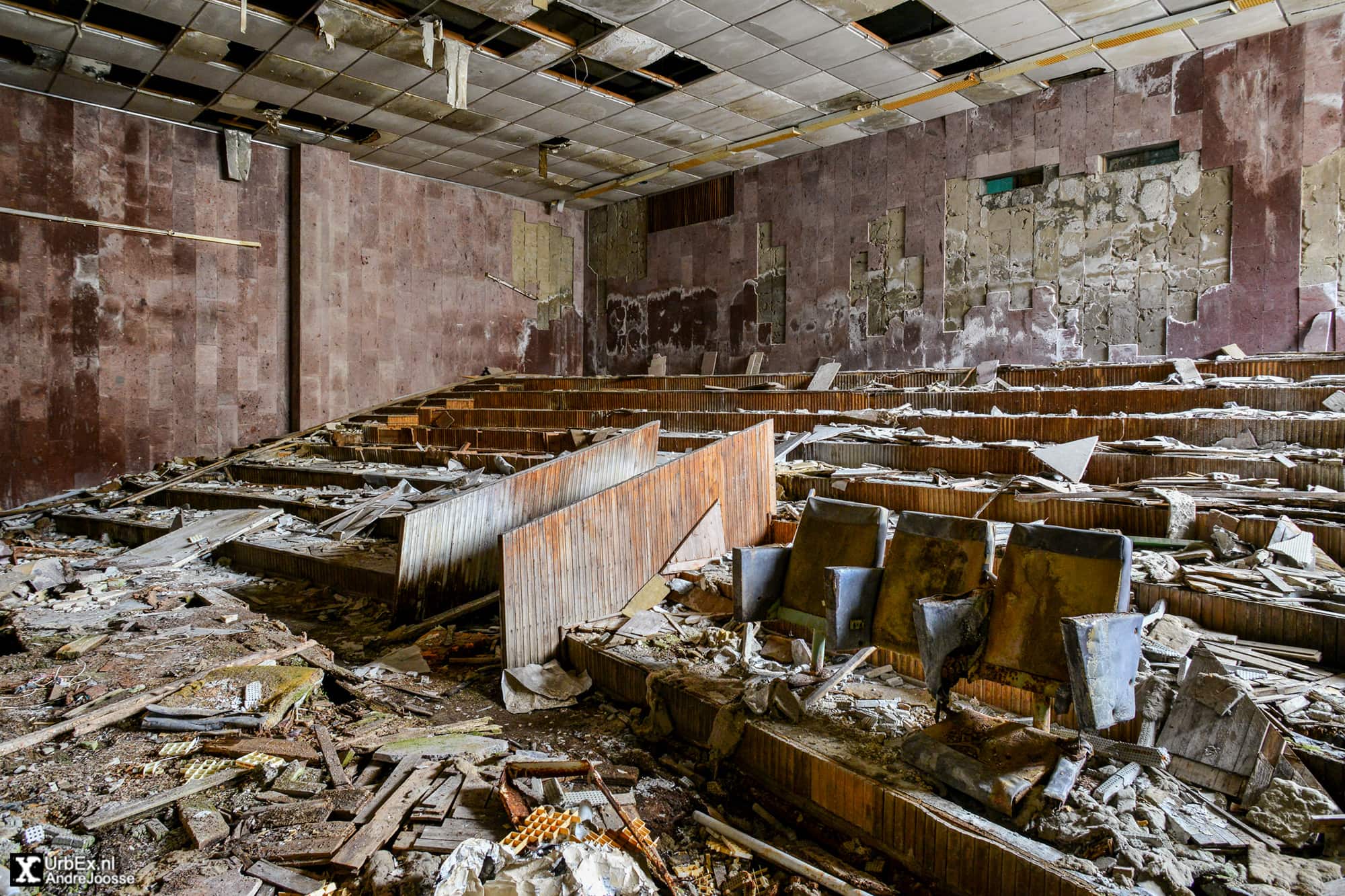
The theater and concert room. 
Empty room in the Palace of Culture. 
A view on Pripyat Park with the ferris wheel. 
Swimming pool rules. 
Art outside the swimming pool. 

Boxing rong entrance. 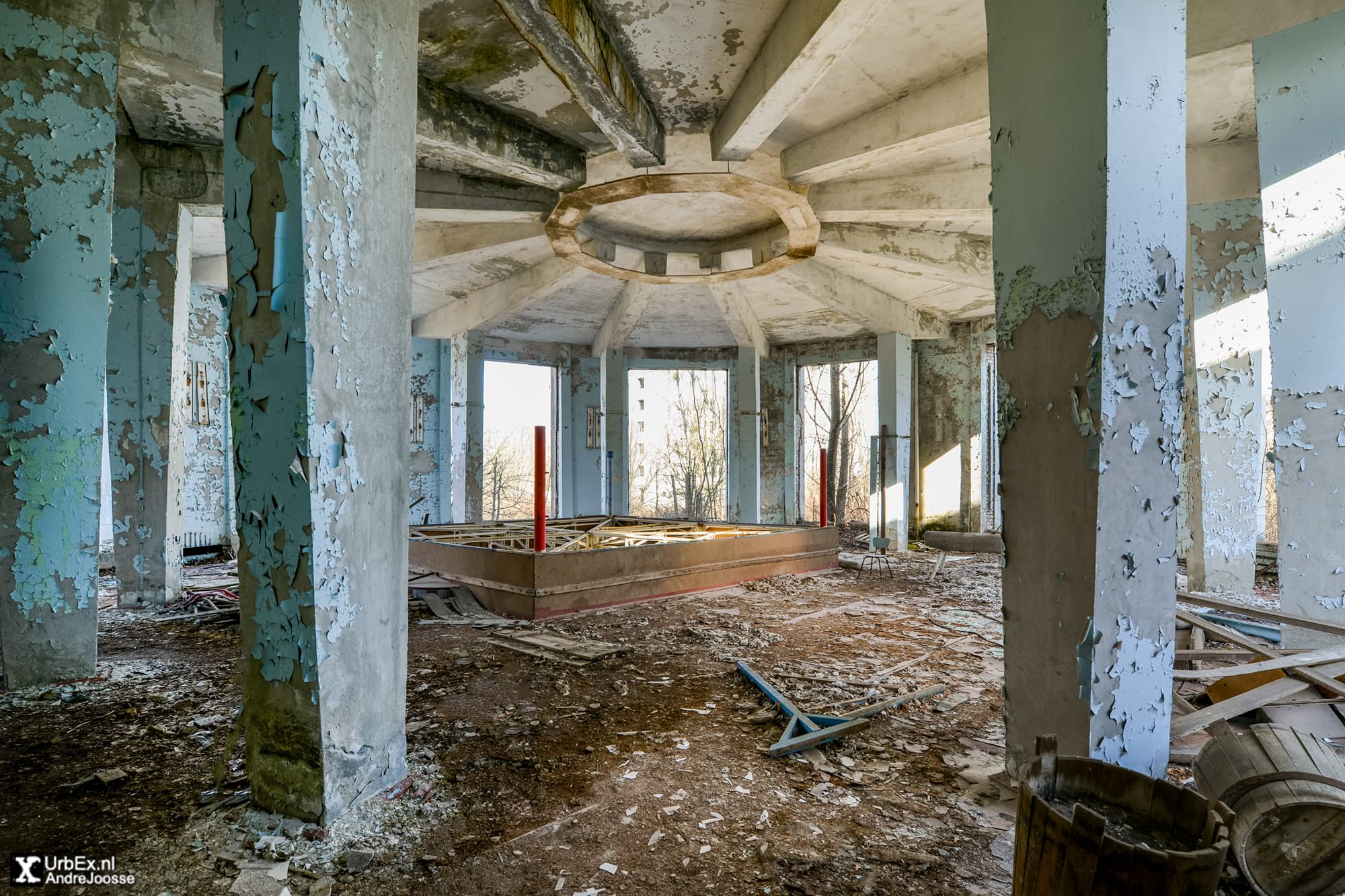
Pripyat boxing ring. 
Pommel horse in the boxing ring. 
Soviet propaganda. 
Portrait of Dimash Kunaev, first secretary of the Communist Party of Kazakhstan. 
Boris Nikolayevich Ponomarev and Grigoriy Vassilyevich Romanov. 
Palace of Culture ‘Energetik’. 
A view from the Hotel Polissya roof.